
CFD · CHECKED 10 OCT 2026
Pepperstone review.
CFD broker offering multiple platforms and 1,444 instruments
OK-ISH
OUT OF 10
AD DISCLOSURE: IF YOU OPEN AN ACCOUNT THROUGH THIS LINK WE MAY EARN A COMMISSION. IT NEVER MOVES THE SCORE. HOW THIS WORKS
Pepperstone is a CFD broker offering MT4, MT5, cTrader, TradingView and other platforms across 1,444 instruments. ASIC AFSL 414530 and CySEC 388/20 are confirmed, while FCA and BaFin licences were not verified here; the main reservation is the conflicting $0 and $10 minimum-deposit figures
Each criterion is scored 1 to 10 from primary sources. The overall score is their unweighted mean. How scoring works.
| Founded | 2010 |
|---|---|
| Minimum deposit | $10 |
| Account opening | 1-3 |
| Platforms | MetaTrader 4, MetaTrader 5, cTrader, TradingView, The Pepperstone platform / Pepperstone Trading App |
- ASIC AFSL 414530 is confirmed for Pepperstone Group Limited
- CySEC licence 388/20 is confirmed
- Six named entities are linked across five jurisdictions
- Standard accounts have no commission and a 1 pip FX markup
- Most deposits and withdrawals are free
- No inactivity or account-keeping fee is charged
- Minimum-deposit figures conflict: $10 in one place and $0 in another
- TradingView is unavailable on Standard accounts
- Phone support hours are not stated
- International bank wires cost $20
- Overnight swap rates vary
- No independent third-party review record is listed
Overview
TrueBroker is a free broker safety checker, and this page is our review of Pepperstone, scored 7.9 out of 10 across regulation, fees, platform, support and reviews. Pepperstone is not one company but a group of separately licensed entities trading under the same brand, and which entity a client actually deals with depends on where that client signs up.
Which entity is which
Pepperstone Limited is the UK entity: we searched the FCA register and found FRN 684312 confirmed as Authorised, effective 05/08/2015, and Companies House confirms the underlying company, 08965105, a private limited company incorporated 28 March 2014, status Active. Pepperstone Group Limited is the Australian entity: the ASIC register confirms AFS licence 414530 held by Pepperstone Group Limited, ABN 12147055703, since 04/02/2013, and the ASIC company dataset separately confirms the company itself, ACN 147 055 703, registered 27/10/2010, status registered. Pepperstone GmbH is the German entity: BaFin’s own company database confirms BAK 151148, BaFin-ID 10151148, LEI 5493002H3UCGHX62SL42, listed as a Wertpapierinstitut in Düsseldorf, with current permissions for Abschlussvermittlung, Anlagevermittlung and Eigenhandel all dated 2021-06-26; the Düsseldorf Handelsregister confirms the company itself under HRB 91279. Pepperstone Financial Services (DIFC) Limited is confirmed on the DFSA public register under reference F004356, listed as an Authorised Firm. Pepperstone Financial Services LLC appears on the UAE Capital Market Authority register, though under a CP code (CP-0001424) rather than the “20200000358” the firm quotes on its own page; the register confirms the company, not that specific number. Pepperstone Markets Limited appears on the Securities Commission of The Bahamas registrant list as at 31 August 2026, though that register publishes no number column, so again the company is confirmed and the “SIA-F217” figure is not. We also found an active Cyprus Investment Firm licence entry for an EU entity on the CySEC register.
One discrepancy is worth flagging directly: an earlier review of this firm quoted a BaFin number of “#154148”, but Pepperstone’s own German site gives “151148”, and our register recheck found zero institutions matching 154148 while confirming 151148 belongs to Pepperstone GmbH. Where the two disagree, the firm’s own published number is the one the register backs.
What Pepperstone charges to withdraw
The firm’s own fee page states no fees on deposits of any method and no account-keeping or inactivity fees. Its FAQ page states that most withdrawal routes are free, but that “a fee of $20 applies only for international bank wires,” deducted from the trading account balance, on top of anything the client’s own bank or an intermediary bank charges. The minimum funding amount for both CFD account types is given as $10 on the firm’s account page.
We fetched Pepperstone’s own site from nine countries in August 2026 for this review: the UAE, Germany, the UK, Indonesia, Japan, Singapore, Thailand, Vietnam and South Africa. Our previous review scored Pepperstone 7.4 out of 10; this one scores it 7.9.
Overview Table
| Headquarters | Not stated as a single global HQ; our evidence shows separately registered offices, including 70 Gracechurch Street, London for Pepperstone Limited and Neubrückstrasse 1, Düsseldorf for Pepperstone GmbH |
| Established | Not stated as a firm-wide founding date; Companies House gives Pepperstone Limited’s incorporation as 28 March 2014 and the ASIC company register gives Pepperstone Group Limited’s registration as 27/10/2010 |
| Countries Served | Not stated as a single list; our evidence shows regulated entities and local pages for the UK, Australia, Germany, Cyprus, the UAE (CMA and DFSA), the Bahamas, Vietnam and Thailand |
| Regulated By | FCA, ASIC, CySEC, BaFin, DFSA, the UAE Capital Market Authority and the Securities Commission of The Bahamas |
| Minimum Deposit | $10, per the firm’s account comparison page |
| Maximum Leverage | Not stated in the pages we fetched |
| Total Instruments | The account comparison page lists 93 forex, 40 commodity, 26 index, 1162 share and 95 ETF instruments, plus cryptocurrency, CFD forward, real-world-asset and perpetual CFD categories with no count given |
| Platforms | MetaTrader 4, MetaTrader 5, cTrader, TradingView (via cTrader), and the firm’s own Webtrader and trading app |
| Customer Support | Live chat, phone, WhatsApp and email, described by the firm as available “24 hours a day on weekdays and 18 hours on weekends” |
| Languages | Arabic, English and Hindi from the UAE-based team, per the firm’s UAE page, plus dedicated Vietnamese and Thai support lines listed on the firm’s regional pages |
Facts List
- The FCA register shows Pepperstone Limited as Authorised under FRN 684312, effective 05/08/2015.
- The ASIC register shows AFS licence 414530 held by Pepperstone Group Limited since 04/02/2013.
- The DFSA public register lists Pepperstone Financial Services (DIFC) Limited as an Authorised Firm under F004356.
- BaFin’s own database shows Pepperstone GmbH, BAK 151148, as a supervised Wertpapierinstitut in Düsseldorf.
- The CySEC register shows an active Cyprus Investment Firm licence for a Pepperstone entity.
- The firm’s own FAQ page states no fees on deposits and no account-keeping or inactivity fees.
- The firm’s own FAQ page states a $20 fee applies only to international bank wire withdrawals.
- The firm’s account page gives $10 as the minimum funding amount for both Standard and Razor accounts.
- The firm’s FAQ page states negative balance protection “does not apply to Pepperstone Pro accounts.”
- The regulator-mandated retail loss disclosure differs by entity across the firm’s own pages: 79.6% on the Bahamas/SCB pages, 72.9% on the UK page, and 75.2% on the Germany page.
Key Takeaways
What the registers actually confirm
Pepperstone runs under seven regulatory tie-ups across the entities we checked, and the public registers back most of them. The FCA register confirms FRN 684312 for Pepperstone Limited, status Authorised, effective 05/08/2015, with Companies House number 08965105 attached. The ASIC register confirms AFS licence 414530 for Pepperstone Group Limited, ABN 12147055703. BaFin’s own database confirms BAK 151148 for Pepperstone GmbH in Düsseldorf, with current permissions for Abschlussvermittlung, Anlagevermittlung and Eigenhandel all dated from 26/06/2021, plus three earlier permissions since ended. The DFSA register confirms Pepperstone Financial Services (DIFC) Limited under reference F004356. The CySEC register confirms an active Cyprus Investment Firm licence entry, a financial-services authorisation rather than a bare company listing.
Two of the seven come back partial. The Securities Commission of The Bahamas lists Pepperstone Markets Limited as a registrant for dealing, arranging and managing capital market instruments including CFDs, but that register publishes no registration-number column at all, so the company is confirmed and the number SIA-F217 is not. The UAE Capital Market Authority register shows PEPPERSTONE FINANCIAL SERVICES L.L.C as CP-0001424, status Active, with pepperstone.com listed as its website, but it publishes a CP code rather than the licence number the firm quotes, so again the company is confirmed and the number is not. A Bahamas company number, 177174 B, stays unchecked by us: the Bahamas Registrar General charges for each company search, which we do not pay, so this is a gap in our checking rather than a finding about the firm. Companies House and the Düsseldorf Handelsregister both confirm the underlying companies, 08965105 and HRB 91279, which is what a company registry does; neither speaks to a trading licence.
Worth flagging separately: an earlier, earlier review of this review quoted a BaFin number of 154148 for Pepperstone GmbH. Pepperstone’s own German site gives 151148, and a register recheck found zero institutions matching 154148 while confirming 151148 belongs to Pepperstone GmbH. Where the two disagree, the firm’s own page and the register match each other; the figure from our earlier review does not.
What Pepperstone charges
The firm’s own fee page for Standard and Razor accounts lists no deposit fees, no withdrawal fees on its standard methods, and no account keeping or inactivity fee. The one fee we found in that material is a flat $20 for international bank wire withdrawals, deducted from the trading account balance, on top of anything a client’s own bank or an intermediary bank charges. The minimum deposit across Standard and Razor CFD accounts is $10 per the account comparison page. Razor pricing runs from $3.50 per lot per side on FX and XAU/USD, plus raw spreads the firm states run from 0.0 on FX and from 0.08 on XAU/USD; cTrader carries its own fixed commission of $6 roundtrip on FX and $7 on XAU/USD, and TradingView, which is a Razor-account product built on cTrader, carries a $7 roundtrip fixed commission per trade. Standard account pricing folds most fees into a 1 pip spread markup with no separate commission on most markets. Share and ETF CFDs carry a commission of 0.07% to 0.20% per side on either account type.
Terms that bind a client
The firm’s own FAQ pages carry several clauses worth reading before funding an account. Negative balance protection, the FAQ states plainly, “does not apply to Pepperstone Pro accounts,” meaning professional-classified clients can end up owing more than they deposited. The same contact page states that a stop loss, take profit or pending order “is only ever a trigger level rather than a guaranteed entry or exit point for your trade” and that orders fill “as market orders at the best available price,” so a stop does not guarantee the price a client set it at. Dormant accounts under 10 units of currency and inactive for three months get archived, and the FAQ says reactivation is “available only for generating trading statements upon request,” not for resuming trading, forcing a new account instead. On dividends, the same page notes a CFD holder “won’t own the underlying share or index CFD” and that “the cash adjustment may not be the same as the exact value of the dividend itself.” And Pepperstone’s own risk disclaimer for its UAE entity states services are “provided on an execution only basis,” with no advice, recommendation or opinion given on any trade.
Support hours and reach
Pepperstone’s own accounts page describes support as available “24 hours a day on weekdays and 18 hours on weekends,” reachable by email, phone, WhatsApp or live chat, with UAE clients specifically offered Arabic, English and Hindi language support. Regional pages we pulled list separate phone and email lines for Australia, Germany, Vietnam and Thailand, alongside registered addresses for the UK, Germany, UAE and Bahamas entities. That coverage is broad on paper; the score attached to support sits at 6.5, and the review’s reader should weigh the stated hours against their own experience getting through on the channel they’d actually use.
Where the loss-rate disclosure differs by entity
The mandated retail-loss percentage that Pepperstone publishes is not one number: the Bahamas and SCB entity pages state 79.6%, the UK Pepperstone Limited page states 72.9%, and the Germany Pepperstone GmbH page states 75.2%. All three come from the firm’s own regional pages rather than from any register, and the spread across entities reflects different client bases and regulatory regimes rather than one worldwide figure.
Licenses & Regulation
Pepperstone operates as a group of separately licensed entities rather than one company, and which entity a client ends up with depends on the site they land on. We checked ten public registers directly, running a positive control on each first so that an empty result would mean absence rather than a broken search.
The registers that confirm Pepperstone
The FCA register confirms FRN 684312 as held by Pepperstone Limited, status Authorised, effective from 5 August 2015, and the same entry ties the firm to Companies House number 08965105. Companies House itself confirms PEPPERSTONE LIMITED as company 08965105, a private limited company incorporated 28 March 2014, status Active, at 70 Gracechurch Street, London EC3V 0HR, though a company registry only confirms a company exists, never that it holds a licence.
ASIC confirms AFS licence 414530 as held by Pepperstone Group Limited (ABN 12 147 055 703), on the register since 4 February 2013. Separately, ASIC’s own company dataset confirms the same entity as ACN 147 055 703, an Australian public company registered 27 October 2010, status registered as at the 14 September 2026 snapshot.
The DFSA public register confirms reference F004356 for Pepperstone Financial Services (DIFC) Limited, listed as an Authorised Firm, and the UAE Capital Market Authority register confirms Pepperstone Financial Services LLC, listing it as CP-0001424, status Active, since 2025, with pepperstone.com given as its site. The CMA register publishes that CP code rather than the licence number 20200000358 the firm quotes on its own pages, so the company is confirmed there and that specific number is not.
BaFin’s company database confirms Pepperstone GmbH under BAK 151148 (BaFin-ID 10151148, LEI 5493002H3UCGHX62SL42), a Wertpapierinstitut based in Düsseldorf, with three current permissions running from 26 June 2021: Abschlussvermittlung, Anlagevermittlung and Eigenhandel, alongside three earlier permissions the register marks as ended. The Handelsregister Düsseldorf separately confirms the same company at HRB 91279, seat Düsseldorf, register sheet current; again, a company registry entry, not a licence.
The Cyprus Securities and Exchange Commission register confirms an active CIF licence entry in its Cypriot investment firms section, held alongside a separate Company Registration Number, at reference #388/20.
Where the register falls short of the number quoted
The Securities Commission of The Bahamas registrant list confirms Pepperstone Markets Limited as a registrant for dealing, arranging and managing capital market instruments, including CFDs, as at 31 August 2026, but that register publishes no registration-number column at all, so while the company is confirmed, the number SIA-F217 that Pepperstone quotes for it cannot be checked against the register itself. On the Bahamian company number quoted on Pepperstone’s own contact page, 177174 B, the Bahamas Registrar General charges for each company search, which we do not pay, so that number has not been checked; that is a gap in what we searched, not a finding about the firm.
What professional and standard clients are exposed to differently
Pepperstone’s own FAQ states plainly: “Negative balance protection does not apply to Pepperstone Pro accounts.” A client who trades on a Pro/professional classification can lose more than the funds deposited, a form of exposure that retail-classified clients trading the same products do not carry. The firm’s account pages also route different symbol suffixes to different regulatory jurisdictions: EURUSD.a is restricted to retail clients under ASIC, EURUSD.r to retail clients under FCA, BaFin or CySEC, EURUSD.p to professional clients under those same three regulators, and the no-suffix version to professional clients under CMA, DFSA, ASIC or SCB, meaning the regulatory protections attached to the same underlying trade depend on which entity and client classification a person is routed through.
A discrepancy worth flagging on the German number
An earlier review of this broker quoted the BaFin registration number as 154148. Pepperstone’s own German site gives it as 151148, and a register recheck found zero institutions matching 154148 while confirming 151148 belongs to Pepperstone GmbH. Where the two disagree, the firm’s own published number and the register both point to 151148.
Beyond licensing, Pepperstone’s UAE risk disclaimer states that “Pepperstone Financial Services LLC does not issue advice, recommendations or opinion in relation to acquiring, holding or disposing of OTC derivatives nor is Pepperstone a financial advisor. All services are provided on an execution only basis”; clients trading through that entity get no suitability assessment from the firm and act entirely on their own judgment.
How to Trade
Pepperstone runs two account types for CFD trading, and the difference between them is entirely about how the cost is packaged. The firm’s own accounts page describes Standard as an account where all fees apart from overnight funding sit inside the spread, with a 1 pip markup and no commission on most markets. Razor strips that markup out and charges a fixed commission instead: from $3.50 per lot, per side, on FX and XAU/USD trades, according to the same accounts page, with raw spreads from 0.0 pips on FX and from 0.08 pips on XAU/USD. Both accounts carry the same $10 minimum deposit, per the firm’s accounts page. Share and ETF CFDs are priced the same way on either account, with the firm’s fee page giving a commission of 0.07% to 0.20% per side. Traders using cTrader pay a fixed $6 roundtrip on FX and $7 on XAU/USD, and TradingView users, who trade on a Razor account by definition, pay a fixed $7 roundtrip per lot on every trade, both figures from the firm’s contact page.
What Pepperstone lets you trade
The account comparison page on Pepperstone’s site lists 93 forex instruments, 40 commodities (with spreads on oil quoted from 2 cents), 26 indices priced 24/5 on the majors, 1,162 share CFDs and 95 ETF CFDs. The firm’s contact page adds cryptocurrency CFDs, and separately lists CFD forwards and Real World Assets as distinct market categories in its site navigation, though the evidence gathered here does not go further into what sits inside those two categories. A Japan-facing page for the firm describes a further product, Perpetual CFDs, pitched as trading 24/7 with no expiry dates, no crypto wallet required, with funding rates disclosed upfront.
Platforms and where each one is sold
Standard accounts trade on Pepperstone’s own webtrader and mobile app, plus MetaTrader 4, MetaTrader 5 and cTrader. Razor accounts add TradingView, which the accounts page notes runs on cTrader’s engine underneath and is not available to Standard-account holders. The account comparison page also documents that the same instrument can carry different symbol suffixes depending on which regulator a client falls under: EURUSD.a is reserved for retail clients under ASIC, EURUSD.r for retail clients under the FCA, BaFin or CySEC, EURUSD.p for professional clients under those same three regulators, and the bare symbol with no suffix for professional clients booked under the CMA, DFSA, ASIC or SCB entities. Which suffix a client sees, in other words, depends on which of Pepperstone’s regulated entities is on the other side of the trade.
Execution: what a stop loss actually guarantees
Pepperstone’s FAQ page is direct about the limits of order types: a stop loss, take profit, or pending stop/limit order is, in its words, “only ever a trigger level rather than a guaranteed entry or exit point for your trade,” and once triggered, orders “are executed as market orders at the best available price.” A client who sets a stop expecting to exit at that exact price can be filled worse, particularly in a fast-moving market. The same page discloses how Pepperstone handles its own market risk on the other side of those trades, describing a hybrid model: “we proactively monitor our exposure, hedging internally when we can but also using multiple external providers to hedge with when the market risk goes beyond certain limits.” That means some client flow is matched inside the firm rather than passed straight to a liquidity provider, which is worth knowing given it’s the same firm setting the price a client’s stop gets filled at.
Dividends, corporate actions and what a CFD position doesn’t give you
Because a share or index CFD is a derivative rather than the underlying instrument, Pepperstone’s contact page explains that a client holding a position over an ex-dividend date is not entitled to the dividend itself, only a cash adjustment, and that adjustment “may not be the same as the exact value of the dividend itself.” The same page is explicit that this also means no ownership rights in the underlying asset ever pass to the client.
Where the downside stops, and where it doesn’t
For retail clients, Pepperstone’s fee page confirms negative balance protection applies. It also states plainly that “negative balance protection does not apply to Pepperstone Pro accounts,” meaning a client classified as professional can lose more than the funds in their trading account, a risk retail clients on the same platform do not carry. Separately, the firm’s contact page describes low-balance dormant accounts, those under 10 units of currency left inactive for more than three months, as archived, with reactivation available “only for generating trading statements upon request” rather than to resume trading; a client in that position has to open a new account to trade again. For UAE clients specifically, the firm’s homepage states that Pepperstone Financial Services LLC provides no advice, recommendation or opinion on any trade and operates on an execution-only basis, leaving the client to judge suitability alone.
Account Types
Pepperstone’s UAE site sells two CFD account tiers, Standard and Razor, and both carry the same minimum deposit: $10, according to the firm’s account-types page.
Standard: every cost folded into the spread
On Standard, Pepperstone’s account-types page describes pricing as spread-only: everything except overnight funding is built into the spread, which carries a 1 pip markup, and no commission is charged on most markets. Standard runs on the Pepperstone webtrader and app, MetaTrader 4, MetaTrader 5 and cTrader. It does not run on TradingView.
Razor: raw spread plus a commission that changes by platform
Razor is priced the other way round. The same account-types page quotes raw spreads from 0.0 pips on FX and from 0.08 on XAU/USD, with a separate fixed commission on top, from $3.50 per lot per side. That commission is not one number across the board: Pepperstone’s fee page gives a flat $6 per lot roundtrip on FX and $7 on XAU/USD for trading through cTrader, and a flat $7 roundtrip per lot for TradingView, which the same page notes runs on Razor pricing. TradingView is sold only through Razor; a Standard account cannot access it.
What either Pepperstone account can trade
The account-comparison page lists the same market counts against both tiers: 93 forex CFDs, 40 commodity CFDs, 26 index CFDs, 1,162 share CFDs and 95 ETF CFDs. Neither tier is shown with a narrower instrument list than the other on that page.
The commission and fee that sit outside the spread comparison
Both accounts pay the same rate when the underlying is a share or ETF CFD: 0.07% to 0.20% per side, per Pepperstone’s fee page. That page also states no fee applies to deposits by any method and no account-keeping or inactivity fee is charged, but its FAQ is direct about the one exception: “For withdrawal requests, a fee of $20 applies only for international bank wires,” taken straight from the client’s trading account balance on top of anything the client’s own bank charges.
Retail and professional access to the same symbol
Pepperstone also splits access to a given symbol by regulator and client classification rather than by a separately branded tier. Its account-comparison page assigns a suffix of .a to symbols tradable by retail clients under ASIC.r to retail clients under the FCA, BaFin or CySEC.p to professional clients under those same three regulators, and no suffix at all to professional clients under the CMA, DFSA, ASIC or SCB. Which version of a symbol a client can open is set by where they are regulated and how they are classified, not by a tier they pick from a menu.
Pepperstone Pro trades away a protection Standard and Razor keep
Pepperstone’s own FAQ states plainly that “negative balance protection does not apply to Pepperstone Pro accounts.” The pages fetched for this review do not give Pro’s minimum deposit, spreads or commission, but this one clause is explicit: a Pro client can lose more than the funds in their account, a floor that Standard and Razor clients keep.
A dormant account gets archived, not paused
The same FAQ warns that accounts with a balance of less than 10 units of currency that have been inactive for more than three months are archived… Reactivation of live trading accounts is available only for generating trading statements upon request. A client who leaves a small balance untouched for three months cannot pick the account back up to keep trading; pulling old statements is the only thing reactivation is for, and resuming trading means opening a new account instead.
Negative Balance Protection
Pepperstone’s fee page addresses negative balance protection directly, and the answer splits by account type. For its Standard and Razor CFD accounts, the firm’s FAQ material does not state a protection policy in the evidence we hold here; what it does state, in the same FAQ, is the carve-out for its professional offering: “Negative balance protection does not apply to Pepperstone Pro accounts.” That single clause does the work of this section. A client trading on Pepperstone Pro can end up owing the firm money beyond whatever was deposited, because the safeguard that stops a losing position from running past zero simply does not apply to that account tier.
What triggers the exposure
The mechanics that create this risk are laid out elsewhere in the same FAQ set. Pepperstone’s own material on stop loss and take profit orders states plainly that “a Stop Loss, Take Profit, or pending Stop/Limit order is only ever a trigger level rather than a guaranteed entry or exit point for your trade” and that “your orders are executed as market orders at the best available price.” In a fast-moving market that means a stop loss can be triggered and then filled well past the level a client set it at, and on a Pro account there is no negative balance backstop to cap what that slippage costs. The two clauses read together: the order type a client relies on to limit a loss is not guaranteed, and the account type that lacks negative balance protection is the one where a bad fill on that order could leave a shortfall the client has to cover.
Where Pepperstone puts the line between retail and professional
The firm’s pages we fetched do not spell out the criteria for who ends up on a Pro account rather than Standard or Razor, so we cannot report the eligibility test itself. What the account comparison material does show is a related split by symbol suffix: pairs like EURUSD.p are “tradable by professional clients under FCA, BaFin or CySEC jurisdictions” while the plain EURUSD symbol with no suffix is for “professional clients under CMA, DFSA, ASIC or SCB jurisdictions.” That confirms professional-client trading exists as a distinct track across several of the regulators on Pepperstone’s own list, including the FCA, which the register shows holds FRN 684312 for Pepperstone Limited as Authorised. It does not tell a reader whether Pro-account status is opt-in, asset-based, or something a client has to apply for, and we are not going to guess.
The rest of the risk disclosure
Two further clauses in the evidence bear on how much a client can lose and on what terms. Pepperstone’s dividend handling FAQ states that with share or index CFDs, “you won’t own the underlying share or index CFD that you’re trading and so you’re not entitled to receive the exact value of the dividend on the ex-dividend date,” and that “the cash adjustment may not be the same as the exact value of the dividend itself.” That is a separate mechanism from negative balance risk, but it belongs in the same picture of what a losing or adverse position actually costs a CFD client here, since neither the fill price nor the dividend adjustment is guaranteed to match what a client might expect. Separately, the firm’s risk disclaimer for its UAE entity states that “Pepperstone Financial Services LLC does not issue advice, recommendations or opinion in relation to acquiring, holding or disposing of OTC derivatives nor is Pepperstone a financial advisor,” with all services… provided on an execution only basis. A client trading without advice carries the full weight of position sizing and risk management themselves, which matters more, not less, on an account type where losses are not capped at the deposited balance.
What we did not find in our evidence
The evidence does not include the Standard or Razor account terms stating a negative balance protection policy in their own words, a percentage or numeric cap on leverage tied to this protection, or margin-call and stop-out level disclosures. We read what Pepperstone’s fee and account FAQ pages say on this topic and it is limited to the Pro-account carve-out and the two execution-risk clauses quoted above; we have not seen the underlying client agreement or terms of business that would set out stop-out levels or margin close-out rules, so none of that is reported here.
Trading Instruments
Pepperstone splits CFD trading across two account types, both drawing from the same market list. The firm’s own account comparison page lists 93 forex instruments, 40 commodities, 26 indices, 1162 shares and 95 ETFs, all traded as CFDs rather than the underlying asset. The same site navigation lists cryptocurrency CFDs, CFD forwards and Real World Assets (RWAs) as separate market categories, and a Japan-facing page adds perpetual CFDs, described there as letting a trader hold a position with no expiry date and funding rates set out in advance.
Standard vs Razor: what changes underneath the same market list
The Standard account folds its costs into the spread, which the firm’s account page states carries a 1 pip markup, with no separate commission on most markets. The Razor account instead prices FX and XAU/USD through raw spreads, quoted from 0.0 pips on FX and from 0.08 on XAU/USD, plus a fixed commission starting at $3.50 USD per lot per side. Both accounts carry a $10 minimum deposit per the account comparison page. Where the two diverge further is on share and ETF CFDs: the fee page states a commission of 0.07% to 0.20% per side applies on both Standard and Razor when trading these instruments, so the “spread only” pitch of the Standard account does not extend to shares and ETFs.
Pepperstone’s platform lineup and what each one can trade
The account comparison page ties platform access to account type: MT4, MT5, cTrader and Pepperstone’s own webtrader and app are available on both Standard and Razor, but TradingView is restricted to Razor accounts and is not available on Standard. The fee page states TradingView accounts are themselves Razor accounts under the hood, charged a fixed $7 USD roundtrip commission per lot, while cTrader carries its own fixed commission of $6 USD for FX and $7 USD for XAU/USD, roundtrip per lot.
The suffix system and who can trade what
The account comparison page sets out a symbol suffix system that gates the same underlying instrument to different client categories by jurisdiction. A symbol carrying the .a suffix, for example EURUSD.a, is tradable only by retail clients under ASIC jurisdiction. The .r suffix is tradable by retail clients under FCA, BaFin or CySEC jurisdictions, and the .p suffix restricts the same instrument to professional clients under those same three regulators. A symbol with no suffix at all is tradable by professional clients under the CMA, DFSA, ASIC or SCB jurisdictions. Read together, the suffix legend means that which suffixed version of an instrument a given client can open depends on which regulated entity holds their account.
What the contract terms say once a position is open
Because every market on this list is traded as a CFD, ownership questions come up around dividends and corporate actions. Pepperstone’s own FAQ states that a client holding a share or index CFD over an ex-dividend date will not own the underlying instrument and so is “not entitled to receive the exact value of the dividend on the ex-dividend date,” adding that the resulting cash adjustment “may not be the same as the exact value of the dividend itself.” The same FAQ addresses order execution: a stop loss, take profit or pending stop/limit order is described as “only ever a trigger level rather than a guaranteed entry or exit point for your trade,” with orders executed “as market orders at the best available price” once triggered, which matters most in fast-moving instruments like commodities or crypto CFDs where slippage on a triggered order can be material.
Execution behind the asset list
Separately from what can be traded, Pepperstone’s own fee page discloses how client exposure across these markets is actually handled: “we proactively monitor our exposure, hedging internally when we can but also using multiple external providers to hedge with when the market risk goes beyond certain limits.” That is a hybrid model, some client positions across this asset list are matched internally rather than passed to an outside liquidity provider on every trade.
The pages we fetched describe the market categories above by name and, for forex, commodities, indices, shares and ETFs, by instrument count on the account comparison page. For crypto CFDs, CFD forwards and Real World Assets, the pages we fetched give no instrument count, so we report those as named categories only.
Education & Analysis
Pepperstone lists five ways into the market: MT4, MT5, cTrader, TradingView and its own web platform and app, described on the account comparison page as The Pepperstone platform / Pepperstone Trading App.
What Pepperstone’s platforms actually cover
The account comparison page names MetaTrader 4 as “world’s most popular FX platform” with what it calls a customisable interface, and MetaTrader 5 as offering “the apex in trading automation” through its execution technology. cTrader is described on the same pages as “fast, streamlined” and built for developing trading robots and custom indicators. TradingView is pitched as access to “the world-famous supercharts,” and the account comparison page notes it runs on cTrader underneath.
Platform access is tied to account type. The Standard account, with a $10 minimum deposit per the account comparison page, covers the Pepperstone webtrader and app, MT4, MT5 and cTrader, but not TradingView. The Razor account, also opened from $10, adds TradingView to that same list. Anyone who opens a Standard account specifically to trade through TradingView’s charts will find that combination is not on offer; TradingView access on this site is a Razor account feature.
What it costs to chart through each one
The pricing sits with the account, not the platform, for MT4, MT5 and cTrader. Standard-account pricing folds most costs into the spread, with what the fee page describes as a 1 pip markup and no commission on most markets. Razor pricing runs the other way: from 0.0 pips on FX and from 0.08 pips on XAU/USD, plus a separate commission of “from USD 3.50 per lot, per side” according to the fee page. cTrader carries its own stated commission figure too, $6 per round trip lot on FX and $7 on XAU/USD, per the same fee material. TradingView is billed the same way as the rest of Razor: the fee page puts it at $7 per lot round trip, since, as the account page states, “TradingView accounts are Razor accounts” and commission is charged on every trade.
None of the fee or account pages in this evidence set carries a platform fee separate from these spread and commission figures. Whatever a trader pays to use MT4, MT5, cTrader or TradingView on this site, it is the account’s spread and commission structure, not a separate charting or platform charge.
Symbol suffixes and who can see what
The account comparison page ties specific symbol suffixes to specific regulatory jurisdictions rather than leaving that detail in a footnote. EURUSD.a is tradable by retail clients only under ASIC jurisdiction. EURUSD.r is for retail clients under FCA, BaFin or CySEC jurisdictions. EURUSD.p is for professional clients under those same three regulators. A symbol with no suffix at all is for professional clients under CMA, DFSA, ASIC or SCB jurisdictions. A trader moving between Pepperstone’s regulated entities, say from the UK entity to the Bahamas-regulated one, is not looking at one uniform symbol set; what shows up on the chart and what account tier can trade it depends on which entity holds the account.
Order execution behind the chart
A stop loss or take profit line on any of these platforms is, in Pepperstone’s own words from its FAQ, “only ever a trigger level rather than a guaranteed entry or exit point for your trade,” and the same FAQ states orders are “executed as market orders at the best available price.” Whatever price a trader marks on a Standard, Razor, MT4, MT5, cTrader or TradingView chart, the fill is not contractually pinned to that level.
On execution itself, Pepperstone’s own contact page describes a hybrid model: the firm says it proactively monitor[s] our exposure, hedging internally when we can but also using multiple external providers to hedge with when the market risk goes beyond certain limits. That statement, taken from Pepperstone’s own page, means some client orders placed through any of these platforms may be matched internally rather than passed straight to an external liquidity provider.
What the evidence does not cover
The pages fetched for this review describe five platforms, their account eligibility and their commission structure, and say nothing about built-in indicator counts, drawing tools, or third-party charting add-ons beyond the TradingView integration itself. Anyone weighing this firm’s charting depth against a specific list of technical indicators or automation features will need to check the platforms directly; that level of detail was not present in what we fetched.
Special Offers
We looked for a promotions or offers page on Pepperstone’s own site as part of reading its fee material and account pages, and found none among the pages in this evidence set. What we did fetch is Pepperstone’s account-comparison page, its fees FAQ, and its deposit/withdrawal breakdown, and none of those describe a welcome bonus, a deposit-matching scheme, a cashback tier, a refer-a-friend credit or any other promotional inducement. We report that as a description of what the pages we hold say, not as a claim that Pepperstone runs no promotions anywhere: a set of fetched pages without a promotions page tells us what we fetched, not what the firm publishes elsewhere or offers through other channels.
What Pepperstone’s own pages describe instead
Where a promotions page might sit, the material we read instead sets out two account types priced on spread and commission. The Standard account folds all fees apart from overnight funding into the spread, which the account page gives a 1 pip markup, with no separate commission on most markets. The Razor account is priced the other way: raw spreads the account page lists as “from 0.0” on FX and “from 0.08” on XAU/USD, plus a fixed commission the fee page puts at “from USD 3.50 per lot, per side” for FX and XAU/USD, and 0.07% to 0.20% per side for share and ETF CFDs on both account types. Both accounts carry the same $10 minimum funding amount, per the account-comparison page.
The fee-free items Pepperstone lists, and the one fee it does charge
The fees page and the deposit/withdrawal breakdown state that Pepperstone charges no deposit fees on any method, and no account-keeping or inactivity fee. A list of payment methods on the fees page, covering Apple Pay, Google Pay, debit and credit cards, PayPal, domestic bank transfer, Neteller, Skrill, BPAY and PAYID, each carries the note “free deposit/withdrawal” alongside a stated processing time (instant deposit for most card and e-wallet methods, up to one or two business days for withdrawal depending on the method). The one named exception is international bank wire: the same fees page states “a fee of $20 applies only for international bank wires” on withdrawal, deducted from the trading account balance. None of this is framed on the page as a limited-time or conditional offer; it is presented as the firm’s standing fee schedule, and we read it that way rather than as a promotion with an expiry or a qualifying trade requirement.
Where a promotional tier might otherwise attach conditions
The kind of small print that usually rides on a bonus, such as a minimum trading volume before a credit becomes withdrawable, or a time limit on claiming it, doesn’t appear anywhere in the fee, account or contact pages we read for Pepperstone. What those pages do attach conditions to is account activity rather than any promotional credit: the contact page’s FAQ states that “accounts with a balance of less than 10 units of currency that have been inactive for more than three months are archived,” and that reactivation of an archived account is “available only for generating trading statements upon request,” not for resuming trading. That is a housekeeping rule on dormant balances, not a promotional condition, and we mention it here only because it is the nearest thing to a conditional term the fee and account material contains.
Set against the fee schedule above, Pepperstone’s own pages describe a broker priced through spread and commission choices between two account types, with a stated fee schedule for funding and withdrawal, and nothing in the material we fetched that reads as a promotional offer, bonus or discount tied to a qualifying condition.
Opening an Account
Opening an account with Pepperstone means choosing between two account types up front, not a single generic sign-up. Pepperstone’s own account-comparison page gives a minimum deposit of $10 for both Standard and Razor accounts, and its fee page states no deposit fee applies on any funding method. Standard folds all trading costs other than overnight funding into a 1 pip spread markup and carries no commission on most markets, while Razor prices raw spreads instead (from 0.0 pips on FX, from 0.08 on XAU/USD) plus a fixed commission from $3.50 per lot per side, and it is the only account that unlocks TradingView alongside MT4, MT5 and cTrader. Funding that $10 minimum can be done through Apple Pay, Google Pay, cards, PayPal, Neteller, Skrill or a domestic bank transfer, each listed on the fee page as free to deposit with, and most crediting instantly.
Which Pepperstone entity actually signs the client up
Which company in the Pepperstone group opens the account depends on where the applicant lives, since the group trades through separately licensed entities rather than one legal person. Pepperstone’s own UAE pages name Pepperstone Financial Services LLC for introduction and financial consultation in the UAE, Pepperstone Financial Services (DIFC) Limited for business booked under Dubai Financial Services Authority reference F004356, and Pepperstone Markets Limited for business booked under the Securities Commission of The Bahamas. A UK applicant instead signs up with Pepperstone Limited, and the FCA register confirms FRN 684312 held by that company, status Authorised, effective 05/08/2015, against Companies House number 08965105. An Australian applicant deals with Pepperstone Group Limited, and the ASIC register confirms AFS licence 414530 is held by that company (ABN 12147055703). A German applicant signs up with Pepperstone GmbH, which the BaFin company database lists under BAK 151148, with permissions for Abschlussvermittlung, Anlagevermittlung and Eigenhandel each running since 26 June 2021. A separate Cyprus licence, #388/20, is confirmed by the Cyprus Securities and Exchange Commission register as an active Cypriot Investment Firm entry, though the register check itself did not surface which Pepperstone company holds it; an earlier review of this broker names that entity as Pepperstone EU Limited, a detail we have not independently checked against the register.
Who Pepperstone will not open an account for
Pepperstone’s UK site states that its information and products are “not intended for residents of Belgium or the United States”, or for use anywhere contrary to local law or regulation; the UAE site repeats the same general bar on distribution to anyone in a jurisdiction where it would be unlawful. Inside the jurisdictions Pepperstone does serve, the account is split further by client classification. The account-comparison page ties four symbol suffixes to specific regulators: .a for retail clients under ASIC.r for retail clients under FCA, BaFin or CySEC.p for professional clients under FCA, BaFin or CySEC, and no suffix at all for professional clients under CMA, DFSA, ASIC or SCB. An applicant onboarding through the UAE, Dubai, Australian or Bahamas entities for that unsuffixed instrument set is being classified as a professional client rather than a retail one.
What the professional classification costs at Pepperstone
That classification has a direct consequence for anyone it applies to. Pepperstone’s own FAQ states that “negative balance protection does not apply to Pepperstone Pro accounts”, so a client opened as, or moved onto, a Pro account can end up owing Pepperstone money beyond whatever they deposited, a liability retail account holders at the same firm do not carry.
Keeping a Pepperstone account open after signup
Pepperstone’s FAQ also attaches a condition to accounts once they exist: “accounts with a balance of less than 10 units of currency that have been inactive for more than three months are archived”, and reactivation of an archived live account is “available only for generating trading statements upon request”. An archived account cannot be reactivated to resume trading; a client in that position has to go through account opening again from scratch.
Getting help while signing up
For applicants who need help during onboarding, Pepperstone lists support by email at support@pepperstone.com, plus region-specific phone lines such as 1300 033 375 (local) and +61 3 9020 0155 (international) for Australia, +49 (0)211 81999940 for Germany, and a UAE-based team offering support in “Arabic, English and Hindi”. The UAE account page also advertises live chat, call and WhatsApp support “24 hours a day on weekdays and 18 hours on weekends”.
Deposits & Withdrawals
Pepperstone charges nothing to fund an account by any method its own fee page lists: Apple Pay, Google Pay, debit and credit cards, PayPal, domestic bank transfer, Neteller, Skrill, BPAY and PAYID all show “free deposit/withdrawal” on that page, and the fees page states plainly that no fees are charged on deposits of any method. The minimum funding amount for a Standard or Razor CFD account is $10, per the firm’s own accounts page.
What Pepperstone charges to withdraw
The same fee-free treatment applies to withdrawals through those same methods, with one exception the firm names directly: its FAQ states “For withdrawal requests, a fee of $20 applies only for international bank wires.” That $20 is deducted straight from the trading account balance, on top of whatever the client’s own bank or any intermediary bank charges along the way, something the firm’s contact page flags as outside its control. Every other route, cards, e-wallets, domestic bank transfer, the mobile-pay options, carries no withdrawal fee on Pepperstone’s side.
How long money takes to move
The fees page timelines are consistent across methods: deposits by Apple Pay, Google Pay, card, PayPal, Neteller and Skrill are instant, with PAYID and BPAY deposits taking up to a business day and domestic bank transfer deposits up to two. Withdrawals are slower across the board: cards, Apple Pay and Google Pay take up to two business days; PayPal, Neteller and Skrill up to one business day; PAYID and BPAY up to two business days; domestic bank transfer up to two business days each way. For clients under the Bahamas (SCB) entity, the contact page also lists bank wire, crypto, Pix, Spei and Zotapay among the available options, with exact choices varying by region.
The account-archiving rule
Idle, low-balance accounts do not stay open indefinitely. The firm’s own FAQ states: Accounts with a balance of less than 10 units of currency that have been inactive for more than three months are archived… Reactivation of live trading accounts is available only for generating trading statements upon request. In practice that means a client who lets a near-empty account sit unused for three months cannot simply resume trading on it later; the firm will pull historical statements from it on request, but resuming live trading means opening a new account from scratch. No account-keeping or inactivity fee is charged in the meantime, per the fees page, but the account itself is taken out of service.
What sits behind the withdrawal, not in it
Two clauses on Pepperstone’s own pages affect what a client actually ends up holding, even though neither is a withdrawal fee as such. First, the risk disclaimer for its UAE entity states that Pepperstone Financial Services LLC “does not issue advice, recommendations or opinion in relation to acquiring, holding or disposing of OTC derivatives nor is Pepperstone a financial advisor. All services are provided on an execution only basis,” meaning clients in that jurisdiction trade and decide when to withdraw entirely on their own judgement. Second, the FAQ on negative balance protection states plainly that “Negative balance protection does not apply to Pepperstone Pro accounts,” so a professional-classified client can end up owing money beyond what they deposited, a liability retail clients on the same broker do not carry, and one that has nothing to do with which payment rail they use to move funds.
Trading costs that reduce the withdrawable balance before it gets there
The fees page also lists costs that shrink an account’s balance well before any withdrawal request is made. Share and ETF CFD trades on both Standard and Razor accounts carry a commission of 0.07% to 0.20% per side. Razor account FX and XAU/USD trades carry a fixed commission from $3.50 per lot, per side. Trading on cTrader adds a fixed roundtrip commission of $6 for FX and $7 for XAU/USD per lot, and TradingView, which the accounts page notes runs only on Razor accounts, carries a fixed $7 roundtrip commission per lot on every trade. None of these are deposit or withdrawal charges, but they are deducted from the same balance a client eventually tries to withdraw, so the $20 international wire fee is not the only figure that determines what a client keeps.
Customer Support
How to reach Pepperstone
The contact page served to UAE visitors gives support@pepperstone.com as the support email, a local-call number for Australia (1300 033 375) and an international line (+61 3 9020 0155), alongside a Bahamas footer number (1786 628 1209) tied to the Pepperstone Markets Limited entity registered at #1 Pineapple House, Old Fort Bay, Nassau, New Providence, The Bahamas. Elsewhere on the site, the account-comparison page states: “Our friendly, local client support team is here to help you 24 hours a day on weekdays and 18 hours on weekends. They’re only an email, call, WhatsApp or live chat message away.” That puts four channels on the table, email, phone, WhatsApp and live chat, with weekend cover running 18 of the 24 hours rather than the full day quoted for weekdays.
Regional language support
Support looks to be split by market rather than run from one desk. Pepperstone’s UAE page states it offers “Arabic, English and Hindi support from our UAE-based team.” The Vietnam-facing site gives a separate contact set, vietnamese@pepperstone.com and a toll-free hotline (1800 4929), with an after-hours English number (+1786 628 1209) that is the same Bahamas number quoted on the UAE contact page. The Thailand-facing site gives thaisupport@pepperstone.com and 1800 01 2314. Germany’s page gives support@pepperstone.com alongside a German-dialled line, +49 (0)211 81999940, for Pepperstone GmbH.
Registered offices behind the entities
Each regulated entity that could end up handling a complaint is a separate company with its own registered address: Pepperstone Limited in the UK at 70 Gracechurch Street, London EC3V 0HR; Pepperstone GmbH in Germany at Neubrückstrasse 1, 40213 Düsseldorf; Pepperstone Financial Services LLC in the UAE at Emaar Square 3, Level 3, Unit 301-02, Downtown, Dubai; and Pepperstone Markets Limited in the Bahamas at the Pineapple House address above. Which of these a client is contracted with, and so which country’s support desk and complaints process applies, depends on which jurisdiction’s account they hold.
What the small print does to a client with a problem
Pepperstone’s FAQ page addresses accounts that go quiet: Accounts with a balance of less than 10 units of currency that have been inactive for more than three months are archived… Reactivation of live trading accounts is available only for generating trading statements upon request. A client who lets a small balance sit idle for three months cannot call support and have the account reopened for trading; the account can only be used afterward to pull historic statements, and a fresh account has to be opened to trade again.
The same FAQ page addresses execution promises directly: A Stop Loss, Take Profit, or pending Stop/Limit order is only ever a trigger level rather than a guaranteed entry or exit point for your trade… your orders are executed as market orders at the best available price. A client disputing a fill that missed their stop level is disputing against a document that already rules out any guarantee on the price.
On dividends, the same page states that a client holding a share or index CFD through an ex-dividend date won’t own the underlying share or index CFD that you’re trading and so you’re not entitled to receive the exact value of the dividend on the ex-dividend date… the cash adjustment may not be the same as the exact value of the dividend itself. That is worth reading before raising a complaint about a dividend adjustment falling short.
The fees FAQ confirms the cost of getting money back out by international wire: “For withdrawal requests, a fee of $20 applies only for international bank wires,” deducted from the trading account balance itself rather than billed separately, on top of whatever the client’s own bank or an intermediary bank charges along the way.
For anyone trading on a Pepperstone Pro account, the FAQ answering “Is negative balance protection available?” states plainly: “Negative balance protection does not apply to Pepperstone Pro accounts.” A Pro client disputing a debt that exceeds their deposited funds is disputing against a account type that was never covered in the first place, unlike a retail account.
And for UAE clients specifically, the risk disclaimer states that “Pepperstone Financial Services LLC does not issue advice, recommendations or opinion in relation to acquiring, holding or disposing of OTC derivatives nor is Pepperstone a financial advisor. All services are provided on an execution only basis.” A complaint about the suitability of a trade is, by that same document, a complaint about a service the firm says it never provided.
Prohibited Countries
Pepperstone does not publish one list of countries it will not serve. What its own pages set out, entity by entity, is narrower than a blocklist, and it is worth reading exactly as it appears rather than as a summary.
Belgium and the United States, named directly
Pepperstone Limited’s UK site states that its information and products are not intended for residents of Belgium or the United States, or for use where that would be contrary to local law or regulation. That is the only place in our evidence naming specific countries as excluded, and it sits on the FCA-regulated UK entity’s own page rather than on a page addressed to visitors generally.
A general unlawful-use clause on the UAE site
The UAE site, run by Pepperstone Financial Services LLC, carries a broader version of the same idea without naming any country: its information and products are described as not intended for distribution to any person in any country or jurisdiction where that distribution or use would be contrary to local law or regulation. That puts the burden of knowing whether Pepperstone’s products are lawful where they live on the visitor, rather than setting out a list Pepperstone checks a signup against.
Pepperstone gates products by regulatory jurisdiction, not by a country list
The clearer pattern in what we read is that access runs through separate regulated entities per region, and which entity a client is placed under, not a country list, decides what they can trade. The account comparison page marks this with different symbol suffixes: EURUSD.a is tradable only by retail clients under ASIC jurisdiction; EURUSD.r by retail clients under the FCA, BaFin or CySEC; EURUSD.p by professional clients under the FCA, BaFin or CySEC; and the no-suffix symbol by professional clients under the CMA, DFSA, ASIC or SCB jurisdictions.
Which Pepperstone entity covers which region
The entities behind those suffixes are named across Pepperstone’s regional pages: Pepperstone Limited, authorised by the FCA under reference 684312, for the UK; Pepperstone Group Limited, licensed by ASIC under AFSL 414530, for Australia; Pepperstone GmbH, supervised by BaFin under number 151148, for Germany; Pepperstone Financial Services (DIFC) Limited, licensed by the DFSA under reference F004356, for Dubai; Pepperstone Financial Services LLC, which we confirmed on the UAE Capital Market Authority’s register as company CP-0001424, a code the register publishes in place of the licence number the firm’s own site quotes; and Pepperstone Markets Limited, which we confirmed on the Securities Commission of The Bahamas’ registrant list, a list that does not publish a registration-number column to check the SIA-F217 the firm quotes against. We also searched the Cyprus Securities and Exchange Commission’s register directly and confirmed an active Cypriot Investment Firm licence under reference #388/20; the entity name attached to that number, Pepperstone EU Limited, comes from an earlier review rather than from the register entry itself.
Each entity’s own risk warning gives a different share of retail accounts that lose money trading CFDs with it, a sign that Pepperstone’s client base is split by entity rather than pooled: 79.6% on the Bahamas/SCB entity’s pages, 72.9% on Pepperstone Limited’s UK pages, and 75.2% on Pepperstone GmbH’s German pages.
A previously circulated country list has been withdrawn
An earlier version of this review reported checking Pepperstone’s homepage, legal, terms and legal-documents pages from an Indonesian exit point on 27 July 2026 and finding no restricted-country list published on any of them, and it noted that a list of prohibited countries then attached to Pepperstone, giving Iran, North Korea, Syria and Cuba as examples, could not be tied to anything the broker itself publishes. That list has been dropped from this review rather than carried forward, because it could not be traced to a Pepperstone page. Anyone who needs a definitive answer for their own country should put it to Pepperstone’s support directly rather than rely on the withdrawn list or the two general clauses above.
Conclusion
Pepperstone’s regulatory footprint is the strongest part of this file. The FCA register confirms FRN 684312 for Pepperstone Limited as authorised, effective 5 August 2015. The ASIC register confirms AFS licence 414530 belongs to Pepperstone Group Limited. The DFSA public register lists Pepperstone Financial Services (DIFC) Limited under reference F004356 as an Authorised Firm. BaFin’s company database confirms Pepperstone GmbH under BAK 151148 with current permissions for Abschlussvermittlung, Anlagevermittlung and Eigenhandel, each running since 26 June 2021. The CySEC register shows an active CIF licence entry for the Cypriot entity in the Cypriot investment firms section. The UAE Capital Market Authority register confirms Pepperstone Financial Services L.L.C. as CP-0001424, status Active, with pepperstone.com listed as its site. Companies House confirms Pepperstone Limited as company 08965105, and the Handelsregister Düsseldorf confirms Pepperstone GmbH as HRB 91279, though a registry entry only confirms the company exists, not that it holds a trading licence. One register was not checked at all: the Bahamas Registrar General charges for each company search, which we do not pay, so the company number 177174 B is unverified by us rather than confirmed or denied. Two other cases are narrower: the Bahamas Securities Industry Act list confirms Pepperstone Markets Limited but publishes no registration-number column, so SIA-F217 itself is not something that register can confirm; the UAE Capital Market Authority register works the same way, publishing a CP code rather than the licence number 20200000358 the firm quotes. None of this is a red flag on its own, it is simply the limit of what each register happens to publish.
What Pepperstone charges
The firm’s own fee page lists no charge for deposits, no account-keeping or inactivity fee, and free withdrawals except by international bank wire, which carries a flat $20 fee taken from the trading account balance under Pepperstone’s own FAQ wording. Minimum funding is $10 on both Standard and Razor accounts, per the accounts page. Standard-account pricing folds cost into a 1 pip spread markup with no separate commission on most markets; Razor pricing runs raw spreads (from 0.0 on FX, from 0.08 on XAU/USD, per the accounts page) plus a fixed commission from $3.50 per lot per side. Share and ETF CFDs carry a commission of 0.07% to 0.20% per side on both account types. cTrader and TradingView route through separate fixed per-lot commissions, $6 to $7 on cTrader and $7 flat roundtrip on TradingView, the latter only available on Razor. None of these pages describe a promotional credit or bonus tier; what they describe is spread markup and per-lot commission as the only pricing mechanisms on offer.
Terms worth reading before funding an account
Pepperstone’s own FAQ states plainly that “Negative balance protection does not apply to Pepperstone Pro accounts,” which means a professional-classified client can lose more than they deposited, a risk retail clients on the same platform do not carry. The same FAQ set states that a stop loss, take profit or pending order is “only ever a trigger level rather than a guaranteed entry or exit point,” with orders filled at “the best available price” once triggered, not the price set. On dormant accounts, the FAQ states that balances under 10 units of currency left inactive for three months are archived, and reactivation is available “only for generating trading statements upon request,” not for resuming trading. Dividend adjustments on share and index CFD positions are described as a “cash adjustment” that “may not be the same as the exact value of the dividend itself,” alongside no entitlement to the underlying asset. For UAE clients specifically, the risk disclaimer states that Pepperstone Financial Services LLC “does not issue advice, recommendations or opinion” and that “all services are provided on an execution only basis.” The firm’s own disclosure also states a hybrid hedging model, hedging internally when we can but also using multiple external providers… when the market risk goes beyond certain limits, meaning some client flow is matched in-house rather than always passed to the market. Worth flagging separately: the regulator-mandated loss statistic on Pepperstone’s own pages is not one number but three depending on entity, 79.6% on the Bahamas/SCB pages, 72.9% on the UK pages, and 75.2% on the German pages.
Where the score lands
Regulation scores 8.5 on the strength of confirmed authorisations across the FCA, ASIC, DFSA, BaFin and CySEC registers, with only the unverifiable Bahamas company number as a gap. Fees score 9, from a USD 6.00 EURUSD round turn on the Razor account through cTrader, and reflect a fee page with no deposit, inactivity or standard withdrawal charges and clearly stated commission structures. Platform scores 9 across MT4, MT5, cTrader and TradingView. Support trails at 6.5 and reviews at 6.4, pulling the overall figure down to 7.9.
Pepperstone gives traders regulator-confirmed entities in the UK, Australia, Germany, Cyprus and the UAE, a fee structure with no deposit or inactivity charges and a flat $20 international wire withdrawal fee, and account terms that strip negative balance protection from Pro accounts and archive dormant low-balance accounts for statements only, all weighed into an overall score of 7.9 out of 10.
What we saw
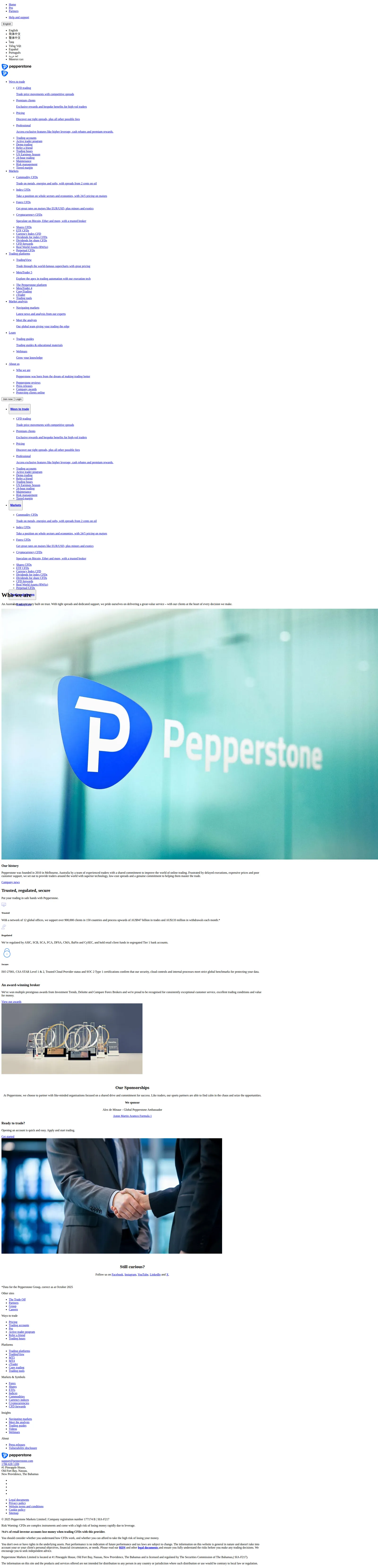
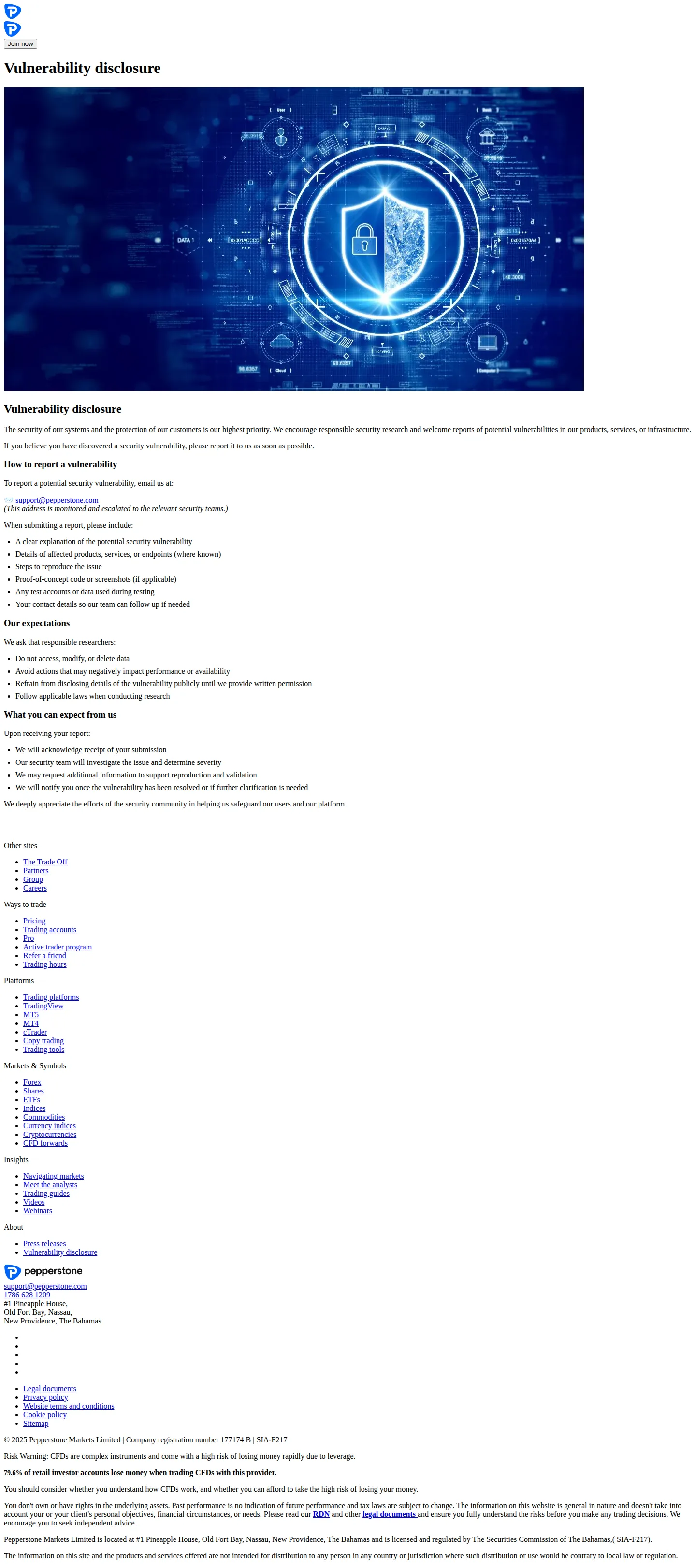
Pages captured from Pepperstone’s own site when this review was written. Brokers change their terms; these are what we read.



Score history
Recomputed daily; every move is on the record. The current score is always the latest row.
| Date | Score | Move |
|---|---|---|
| 2026-09-19 | 7.9 | ▲ |
| 2026-09-13 | 7.4 | ▲ |
| 2026-09-12 | 7.3 | ▲ |
| 2026-08-26 | 6.6 | ▼ |
| 2026-07-25 | 7.9 | ▼ |
| 2026-07-18 | 8.1 | = |
| 2026-07-11 | 8.1 | · |
FAQ
Is Pepperstone regulated?
ASIC AFSL 414530 for Pepperstone Group Limited and CySEC 388/20 are confirmed. FCA 684312 and BaFin 151148 were not verified in the supplied checks
What fees does Pepperstone charge?
Standard accounts have a 1 pip FX markup with no commission. Razor accounts charge $3.50 per lot per side, while international bank wires cost $20
Does Pepperstone charge an inactivity fee?
No inactivity or account-keeping fee is published. Deposits and most withdrawals are free
Which platforms does Pepperstone offer?
Pepperstone offers MT4, MT5, cTrader, TradingView, an in-house web platform, a mobile app and copy trading
Is TradingView available on all Pepperstone accounts?
No. TradingView is unavailable on Standard accounts despite a claim that all markets are available across all accounts
What support channels does Pepperstone offer?
Support is available by email, phone, live chat and WhatsApp. Chat and WhatsApp hours are 24 hours on weekdays and 18 hours on weekends
How this review works
Track Pepperstone live: score moves and red notices, in your pocket.