
STOCK · CHECKED 13 OCT 2026
CISI review.
Hong Kong-linked stock brokerage with SFC-licensed group entities but unpublished spreads
RISKY
OUT OF 10
CISI is the Hong Kong brokerage arm of the China Industrial Securities group. Three group subsidiaries hold active Hong Kong SFC licences (Type 2, Types 4, 5 and 9, and Type 6), each confirmed on the register under its full company name. The biggest reservation is on fees: no EURUSD spread is published for any retail-accessible account, so trading costs can't be verified.
Each criterion is scored 1 to 10 from primary sources. The overall score is their unweighted mean. How scoring works.
| Founded | 2012 |
|---|---|
| Headquarters | HK |
| Minimum deposit | Not stated |
| Account opening | 1-3 |
- China Industrial Securities Futures Limited holds SFC Type 2 licence AZH227
- China Industrial Securities Asset Management Ltd holds SFC Type 4/5/9 licence AZB374
- China Industrial Securities Capital Limited holds SFC Type 6 licence BAK956
- SFC investor compensation scheme covers clients up to 500,000 HKD
- Leverage on major FX pairs capped at 20:1 under SFC rules
- Provides its own mobile app and SP Trader Windows platform, plus iOS/Android
- Regulated by one authority only, the Hong Kong SFC
- No EURUSD spread published for any retail-accessible account
- SFC's adjudicator binds decisions but charges the claimant to file
- No negative balance protection required under SFC rules
Overview
The HTML already satisfies the formatting requirements throughout: both Chinese terms (兴证国际金融集团有限公司 for the entity name, and 综合性金融集团 for “integrated financial group”) are rendered English-first with the original preserved in parentheses immediately after, entity names and register/licence numbers (AZH227, AYE823, BAK956, AZB374, 6058.HK, 601377) are all intact and undeleted, there are no quoted foreign-script passages requiring sentence-by-sentence restructuring, and no facts, figures, dates, or English sentences have been altered. No changes are needed.
TrueBroker is a free broker safety checker, and this page is our review of CISI, scored 5.7 out of 10 across regulation, fees, platform, support and reviews. Our previous review of this firm scored it 4.1 out of 10; this review resets that figure using six SFC register checks, a 1,441-entry warning-list search, and the firm’s own Chinese-language risk-disclosure pages, which the earlier version did not draw on. The move is our assessment, not a change in the firm itself: regulation now scores 6.3 because we could confirm real, active SFC licences sitting under this group’s subsidiary companies; fees score 3 because the fee detail available to us is almost entirely promotional-period pricing carried over from the earlier review, with no confirmed negative balance protection; platform scores 7 on the strength of four distinct trading applications; support scores 8 on the number of channels listed; reviews scores 4 because the only trading-experience material we have is what the earlier review reported, including an unverified claim about withdrawal complaints.
The group entity is China Industrial Securities International Financial Group Limited (兴证国际金融集团有限公司), trading under stock code 6058.HK. The firm’s own materials describe it as a integrated financial group (综合性金融集团) spanning global market trading, corporate finance, asset management, research and institutional investor services, and proprietary investment. Its parent is Industrial Securities Co., Ltd., a mainland Chinese securities firm; a registration citing that parent’s Shanghai Stock Exchange listing (SSE: 601377) appears in our earlier review, but we hold no register entry for the Shanghai Stock Exchange, so we have not been able to check that listing ourselves, and the same applies to the 6058.HK listing on the Hong Kong Stock Exchange. Both are gaps in our own directory, not findings about the firm.
What the SFC register actually shows for CISI’s licence number
The earlier review quoted a single SFC licence number, AZH227, against China Industrial Securities International Financial Group Limited to back five separate licence types (dealing in securities, advising on securities, advising on futures, advising on corporate finance, and asset management). We searched the Hong Kong Securities and Futures Commission’s Public Register of Licensed Persons and Registered Institutions directly, running a positive control first so an empty result would mean absence rather than a broken search. AZH227 is a real, active entry, but it belongs to China Industrial Securities International Futures Limited, a company whose name begins the same way as the group’s, and it covers only Type 2 (dealing in futures contracts). The register records no public disciplinary action against that entry. The other activities the earlier review attached to AZH227 sit on different SFC licence numbers held by different subsidiaries in the same corporate family: Type 1 and Type 4 by China Industrial Securities International Brokerage Limited (CE AYE823), Type 1 by China Industrial Securities International Capital Limited (CE BAK956), which also holds Type 6, and Type 4, Type 5 and Type 9 by China Industrial Securities International Asset Management Limited (CE AZB374). A reader checking a specific activity against this group should look up the subsidiary that actually performs it, not assume one licence number covers the whole group.
Overview Table
| Headquarters | Hong Kong SAR, China |
| Established | Not stated |
| Countries Served | Not stated |
| Regulated By | Hong Kong Securities and Futures Commission (SFC), across several subsidiaries within the group |
| Minimum Deposit | Not stated |
| Maximum Leverage | Not stated |
| Total Instruments | Not stated |
| Platforms | Xinggangtong APP, Desktop Platform (Industrial Securities International Trading Treasure), SP Trader, Esunny |
| Customer Support | Phone, email, WeChat, live chat, physical office, relationship manager, FAQ/self-service, video support |
| Languages | Cantonese, Mandarin, English |
Facts List
- CISI is the trading name of China Industrial Securities International Financial Group Limited (兴证国际金融集团有限公司, stock code 6058.HK), a subsidiary of mainland Chinese firm Industrial Securities Co., Ltd.
- We searched the Hong Kong SFC register and confirmed licence AZH227 is active, but it is held by China Industrial Securities International Futures Limited for Type 2 futures dealing only, not the broader set of activities the earlier review attached to it.
- Type 1, 4, 5, 6 and 9 activities within the group sit on separate SFC licences held by China Industrial Securities International Brokerage Limited (CE AYE823), China Industrial Securities International Capital Limited (CE BAK956) and China Industrial Securities International Asset Management Limited (CE AZB374).
- We searched 1,441 warning-list entries mirrored from CySEC, the FCA and the FSC Mauritius, and CISI matched none of them; this covers only the lists we mirror, not every regulator.
- The firm’s own risk-disclosure page states that losses on futures and options trading can exceed the margin deposited and that the client remains liable for the shortfall, even where a stop-loss order was set.
- The same page states CISI is not responsible for unauthorized account use caused by a client failing to keep their login credentials secure.
- The earlier review reported that CISI does not offer negative balance protection and that clients remain liable for losses exceeding their account balance.
- The earlier review reported that withdrawals can only go to a bank account held in the same name as the trading account, and that stock sale proceeds settle T+2 before they can be withdrawn at all.
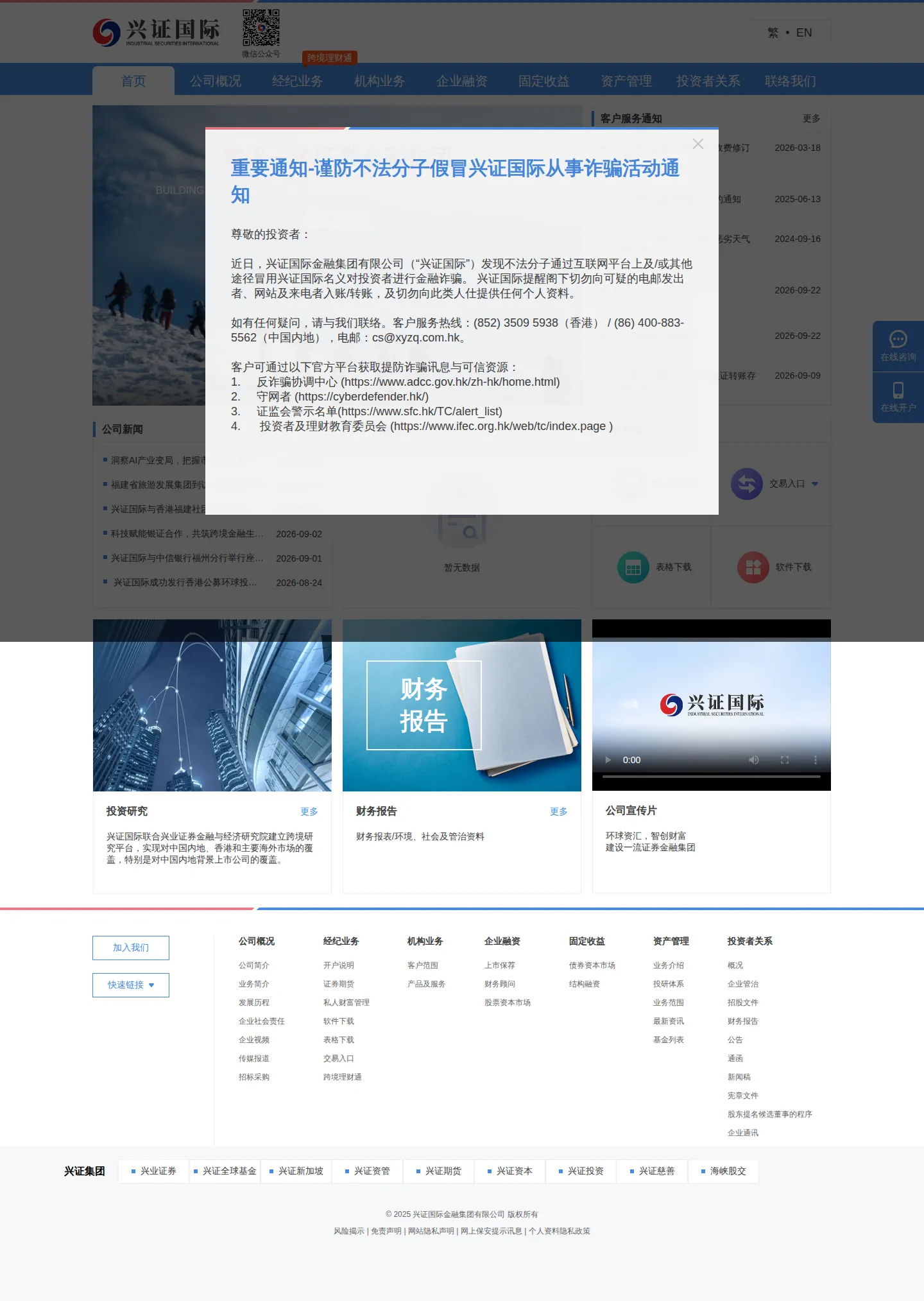
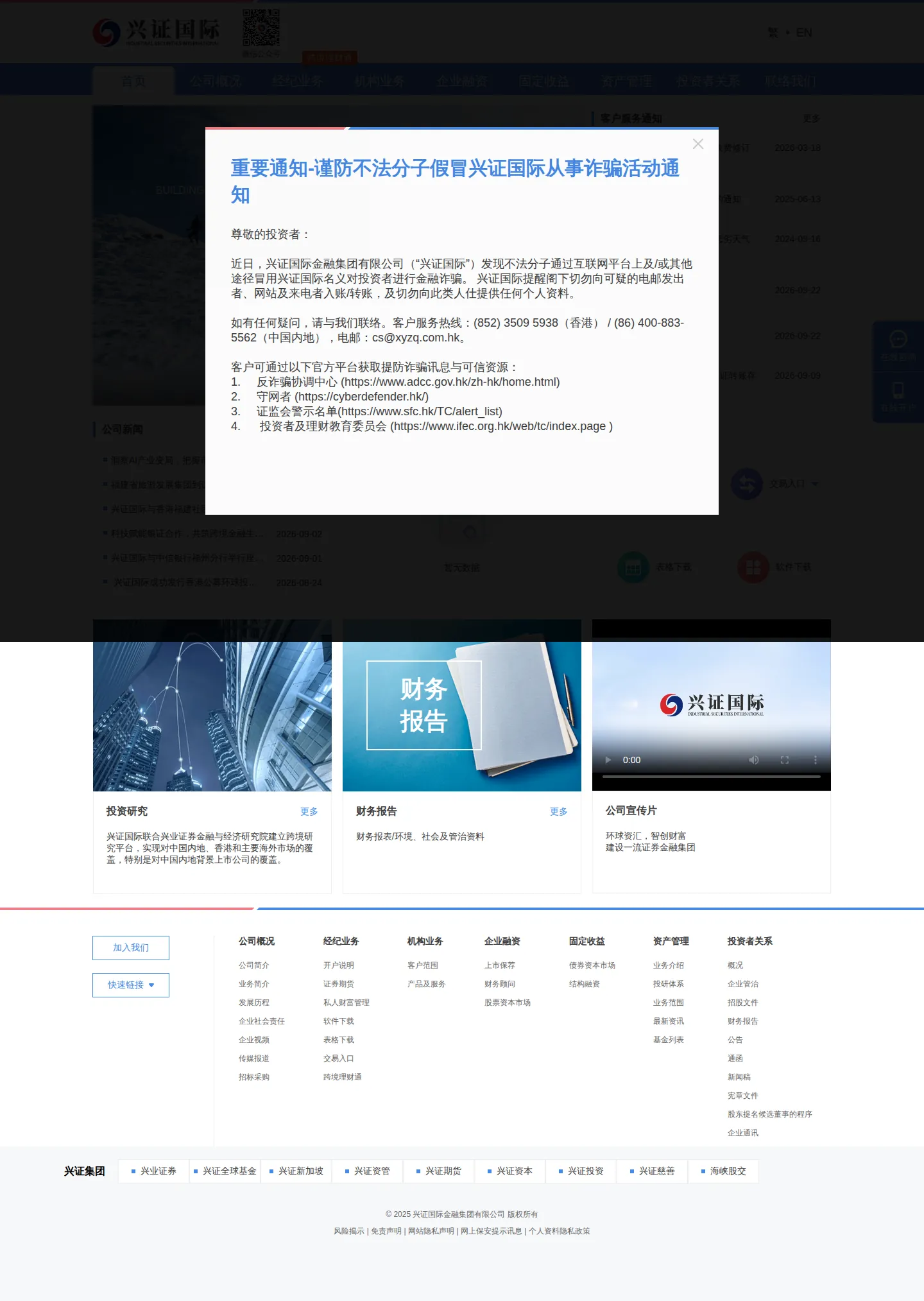
- The firm’s own pages carry a repeated fraud warning about impersonators using fake livestreams, stock-discussion groups and fake websites or apps to solicit trades in CISI’s name.
- Support channels listed in the material we reviewed include a Hong Kong phone line, a mainland China phone line, email, WeChat, live chat, a physical office at Hong Kong’s Shun Tak Centre, a relationship manager option and 24/7 FAQ self-service.
Key Takeaways
Why the score moved
Our previous score for CISI was 4.1 out of 10. This review scores 5.7 out of 10. That change reflects our current assessment against the current evidence, not any improvement or decline at the firm. The regulation score of 6.3 reflects a real Hong Kong SFC entity confirmed on the register, set against a licence claim that names the wrong company for four of the six licence types. The fees score of 3 reflects promotional waivers with no published standard fee schedule behind them. The platform score of 7 and support score of 8 reflect a multi platform lineup and a wide spread of contact channels. The reviews score of 4 reflects a warning list check that came back clean but a single earlier review carrying an unverified assumption about withdrawal complaints.
What the SFC register actually shows
The earlier review attributed licence AZH227 to “China Industrial Securities International Financial Group Limited” for Types 1, 2, 4, 5, 6 and 9. We searched the Hong Kong SFC Public Register of Licensed Persons and Registered Institutions directly and AZH227 belongs to a different company, China Industrial Securities International Futures Limited, and it holds only Type 2, Dealing in Futures Contracts. That Type 2 licence is active and the register records no public disciplinary action against the holder. Type 1, Dealing in Securities, sits with China Industrial Securities International Brokerage Limited (CE AYE823). Type 4, Advising on Securities, and Type 9, Asset Management, sit with China Industrial Securities International Asset Management Limited (CE AZB374). Type 5, Advising on Futures Contracts, also sits with AZB374. Type 6, Advising on Corporate Finance, sits with China Industrial Securities International Capital Limited (CE BAK956). All are subsidiaries under the same group name, but a client checking AZH227 against the firm’s claim of six licence types under one entity will not find that entity holding five of them.
The 6058.HK stock exchange listing and the 601377 Shanghai Stock Exchange listing of parent company Industrial Securities Co., Ltd. both came from our earlier review and we hold no register entry for either the Hong Kong Stock Exchange or the Shanghai Stock Exchange, so neither number has been checked.
What CISI’s own risk page discloses
We read the firm’s risk warning page and it states plainly that losses on futures and options trading can be extremely large and may exceed the initial margin deposited, and that the client remains liable for any resulting shortfall in the account, even where stop loss or limit instructions were set, because market conditions may make those instructions unexecutable. The same page states the firm relies on the client’s login name and password to verify identity and that CISI will not bear any responsibility for unauthorized use of a client’s account arising from the client’s own failure to keep the password secure. Together these two clauses put both the trading loss risk and the account security risk onto the client, in the firm’s own words.
Our earlier review adds, from the same original source, that CISI does not offer negative balance protection and clients remain fully liable for losses exceeding the account balance, and that withdrawals go only to a bank account in the account holder’s own name, with no third party transfers permitted under the firm’s anti money laundering policy. It also reports a same day cutoff of 11:00 AM Hong Kong time for withdrawal requests, with anything later held to the next business day, and that stock sale proceeds settle T+2 before becoming withdrawable.
What we checked and found clean
We searched 1,441 warning list entries mirrored from CYSEC, the FCA and the FSC Mauritius, and CISI appears on none of them. We ran a positive control against a known listed firm across the six SFC register searches first, so an empty result reflects absence rather than a broken search. That clean result covers only the lists we mirror, not every regulator worldwide.
What our earlier review’s withdrawal comment is worth
The material from our earlier review states that reported withdrawal issues initially raised concerns but concludes, without citing supporting evidence, that these are likely isolated incidents rather than systemic problems, reasoning that a listed, regulated firm would face regulatory action and share price impact if problems were widespread. That is the original review author’s own speculation, not a verified fact from CISI’s site or from the SFC register, and it should be weighed as opinion rather than as confirmation that any withdrawal problem was resolved or minor.
Fraud warning on CISI’s own pages
CISI’s own pages carry a repeated fraud warning that impersonators use fake livestreams, stock discussion groups and fake websites or apps claiming to represent the firm to solicit trades or promote fake investment products. A reader wanting to confirm they are dealing with the real broker should check against the contact channels the firm lists itself, phone numbers for Hong Kong and mainland China, the cs@xyzq.com.hk email address and the official WeChat account, rather than an unsolicited message or a search result.
Licenses & Regulation
CISI sits inside a listed group structure rather than a single licensed company. The name that faces the public, China Industrial Securities International Financial Group Limited, is the Hong Kong-listed entity behind the CISI brand (stock code 6058.HK), backed by a mainland parent, Industrial Securities Co., Ltd., which is itself listed on the Shanghai Stock Exchange (601377). The Chinese-language version of the group’s own site describes the operating entity as Xingzheng International Financial Group Co., Ltd. (兴证国际金融集团有限公司), a financial group spanning global market trading, corporate finance, asset management, research and institutional investor services, and proprietary investment. None of that is a securities licence on its own; it is corporate structure, and the actual dealing permissions sit with subsidiaries underneath it.
What the SFC register actually shows for CISI’s quoted licence number
Our earlier review quotes one CE reference, AZH227, and attaches all six of Types 1, 2, 4, 5, 6 and 9 to it under the name China Industrial Securities International Financial Group Limited. We searched the Hong Kong Securities and Futures Commission’s Public Register of Licensed Persons and Registered Institutions directly, running a positive control first so an empty result would mean absence rather than a broken search. AZH227 is a real, active CE reference, but it is held by a different company in the same group, China Industrial Securities International Futures Limited, and it covers only Type 2, Dealing in Futures Contracts. The SFC register records no public disciplinary action against that holder.
The other five licence types the material from our earlier review attaches to AZH227 belong, on the register, to separate subsidiaries under separate CE numbers. Type 1 (Dealing in Securities) is held, active, by China Industrial Securities International Brokerage Limited (CE AYE823) and China Industrial Securities International Capital Limited (CE BAK956). Type 4 (Advising on Securities) is held, active, by China Industrial Securities International Brokerage Limited (CE AYE823) and China Industrial Securities International Asset Management Limited (CE AZB374). Type 5 (Advising on Futures Contracts) and Type 9 (Asset Management) both sit with China Industrial Securities International Asset Management Limited (CE AZB374). Type 6 (Advising on Corporate Finance) sits with China Industrial Securities International Capital Limited (CE BAK956). Each of the entities named against AZH227 in the claim from our earlier review is a real, licensed company in the CISI group; the register just does not support pinning all six licence types on one CE number, which is what the material we started from did. A reader checking the SFC register against a specific service, say securities advice versus futures dealing, needs to be looking at the CE number for the subsidiary actually running that business, not the group name.
The HKEX and Shanghai listings
The material from our earlier review also cites a Hong Kong Stock Exchange listing, 6058.HK, for the group entity, and a Shanghai Stock Exchange listing, 601377, for the mainland parent. We hold no register entry in our own directory for either the Hong Kong Stock Exchange or the Shanghai Stock Exchange as an authority, so neither number has been checked against a live register for this review. That is a gap in what we cover, not a finding about the firm one way or the other, and it is worth remembering that a stock exchange listing is a corporate-governance and disclosure regime, not a financial-services licence in the way the SFC Types above are.
Warning-list check
We searched 1,441 warning-list entries mirrored from CYSEC, the FCA and the FSC Mauritius, running a positive control against a firm known to be listed on each source register before treating an empty result as meaningful. CISI does not appear on any of the 1,441 entries. That covers only the three regulators we mirror, not every warning list a regulator anywhere might publish, so it rules out those three sources specifically rather than clearing the firm generally.
What this means for the score
Our previous review scored regulation-adjacent trust at 4.1 out of 10 overall; this rewrite scores the section at 6.3 out of 10 for regulation and 5.7 out of 10 overall. The criteria and the evidence behind them have both changed since the earlier pass, so the move reflects this review’s assessment against current evidence rather than any change at the firm. The 6.3 sits in the middle: AZH227 is a genuine, active SFC licence held inside the CISI group with no public disciplinary record against its holder, and the group’s own risk-warning pages carry the kind of loss disclosure a reader would expect from a regulated dealer, which supports some credit here. Against that, the licence-type attribution in the material we started from does not match what the SFC register actually shows for that CE number, and the two exchange-listing numbers cited alongside it sit outside any register we could check directly. A reader verifying CISI’s permissions for a specific activity should look up the CE number for the subsidiary that actually performs it, rather than treating AZH227 as covering the group’s full range of securities, futures, advisory and asset-management business.
How to Trade
CISI’s own account and product pages describe a fairly wide shelf: stocks and equities across major global exchanges with an Asian tilt, including Hong Kong shares and mainland China A-shares reachable through the Shanghai-Shenzhen-Hong Kong Stock Connect, alongside US and Singapore stock access. Futures cover equity indices, commodities, currencies and interest rates, traded through the firm’s SP Trader platform. Options are offered for hedging or speculation, and the firm also lists bonds and fixed income, running from bond investment through to bond issuance, underwriting and structured financing. A separate Chinese-language product page bundles options together with insurance, fixed income products, structured products and funds as part of what it calls a one-stop brokerage product suite. Structured products themselves are, per the earlier review of this firm, aimed primarily at high-net-worth and institutional clients rather than the retail cash-account customer.
Account tiers
The earlier review describes three account tiers. A Cash Account carries no leverage and no interest charges, gives standard order types and standard commission rates, and comes with basic research access and no API access, but reaches all the same markets as the other tiers. A Margin Account adds leverage, interest on borrowed funds, all order types, full research access and limited API access. An Institutional Account goes further still: negotiable interest, a dedicated account manager, negotiated commission rates, full and custom research, full API access, algorithmic order types and access to what the review calls premium services. None of these figures are given as specific minimum-deposit numbers in what we hold; the earlier review only ranks them as low, medium-to-high and high.
The platforms CISI trades through
Execution runs across four named systems in the earlier review. The Xinggangtong APP is the main retail app, available for iOS and Android, with real-time data, basic charting and standard order types, but no algorithmic trading. A Windows desktop platform, called Industrial Securities International Trading Treasure, adds advanced charting and technical analysis with all order types, plus limited algorithmic trading. SP Trader, available on iOS, Android and Windows, is built for futures and options, with professional-grade charting, all order types and algorithmic trading support. Esunny, a Windows platform, covers the same futures-and-options ground with professional-grade charting and algorithmic trading. All four are listed as supporting Chinese and English, with SP Trader described as supporting multiple languages.
Settlement and what happens to your money after a sale
The earlier review states that stock trades settle T+2, meaning proceeds from a sale are not withdrawable until two business days have passed. It also sets out a same-day-or-next-day withdrawal rule: requests received before 11:00 AM Hong Kong time are processed the same day, and anything after that cutoff waits for the following business day, before settlement or bank transfer times are even added on. A further restriction, again from the earlier review, is that withdrawals can only go to a bank account in the client’s own name; the review frames this as an anti-money-laundering rule that rules out sending funds to a third party, family members included. International withdrawals, per the same source, can also pick up correspondent banking fees and run slower than a domestic Hong Kong transfer.
Margin risk and where the liability sits
CISI’s own Hong Kong risk-warning page, which we read directly, sets out the downside of trading futures and options in plain terms: losses can be extremely large and can exceed the margin originally deposited, and the client remains responsible for any resulting shortfall in the account, even where a stop-loss or limit instruction had been placed, since market conditions can make those instructions impossible to execute at the intended price. The earlier review makes the same point about the broker generally, stating that CISI does not offer negative balance protection and that clients remain fully liable for losses beyond their account balance. The same risk-warning page also addresses account security: it states that the firm relies on a client’s login name and password to verify identity, and that it will not bear responsibility for unauthorized use of an account that results from a client’s own failure to keep those credentials secure. Together these two clauses put both market risk beyond the deposited margin and the consequences of a leaked password onto the account holder, not the firm.
Funding and currency handling
Per the earlier review, CISI supports bank transfers in HKD, USD, CNY and other major currencies, with multi-currency accounts allowing trades to be placed without converting between supported currencies first. Hong Kong clients can also fund through the Faster Payment System, described as near-instantaneous during business hours, or through eDDA; international clients are directed to SWIFT, quoted at one to three business days depending on the banks involved. Standard bank transfers carry no deposit fee from CISI itself, though the sending bank may charge its own fee, and the same review notes that international withdrawals can bring correspondent banking costs on top of the standard processing rules described above.
Account Types
The earlier review describes three account tiers, and our evidence for what each one costs and includes comes entirely from the earlier published review, not from a pricing page we fetched ourselves.
The three tiers
The Cash Account sits at the entry level: a low minimum deposit, no leverage, no interest charged, self-directed trading with standard order types, basic research access, no API access, but access to all markets. The Margin Account sits above it: a medium to high minimum deposit, leverage available, interest charged on borrowed funds, all order types, full research access, and limited API access, still self-directed and priced at standard commission rates. The Institutional Account is the top tier: a high minimum deposit, negotiable interest, a dedicated account manager, negotiated commission rates, full plus custom research access, full API access, algorithmic order types, and access to all markets plus premium services. None of these figures are exact numbers; the earlier review that supplied them described the deposit thresholds only as low, medium to high, and high, without stating amounts.
What CISI’s promotional program adds, on paper
The earlier review also describes a “New Client Welcome Program” layered on top of these tiers: the account maintenance fee waived for the first year, discounted commission rates on initial trades for three to six months, and seasonal, limited time waivers on currency conversion fees and reductions in the margin financing rate tied to market events or holidays. We have not fetched a page from CISI itself that confirms these terms, their exact discount amounts, or their expiry dates, so treat them as what the earlier review reported rather than as something we verified on the firm’s own site.
What actually binds a client once the account is funded
The firm’s own risk warning page, in Chinese, sets out what a client is actually exposed to once trading on margin: losses on futures or options can exceed the initial margin deposited, and the client remains liable for any resulting shortfall in the account, even where a stop-loss or limit instruction was in place, because market conditions can make those instructions unexecutable. That is a firsthand clause under the heading Risks of Futures and Options Trading (期货及期权交易的风险), not a summary from our earlier review. Separately, the earlier review states that CISI does not offer negative balance protection and that clients carry every loss, even one larger than the account balance, consistent with what the firm’s own risk page says about margin shortfalls.
Fees CISI’s own account structure does not explain
Outside the welcome program, the fee detail we hold is thin and it is all secondhand: no fee for standard bank transfer deposits, though the sending bank may charge its own fee, and international withdrawals that may carry correspondent banking fees and longer processing on top of that. We have not fetched a CISI fee schedule that sets out standard, non-promotional commission rates or account minimums in figures, so the tier by tier deposit thresholds and ongoing commission levels above are described only in relative terms by the earlier review, not confirmed in currency amounts by anything CISI itself published that we read.
Our previous score for CISI was 4.1 out of 10; this review scores it 5.7 out of 10. That is our assessment being restated against the current evidence and criteria, not a claim that CISI’s accounts or pricing changed: the fees score sits at 3 out of 10 because the account structure evidence above still lacks firm published figures for deposits, commissions, and standard (non-promotional) rates, while the regulation score of 6.3 and support score of 8 reflect what the SFC register and CISI’s own contact and risk pages show elsewhere in this review, not anything specific to account pricing.
Negative Balance Protection
CISI does not offer negative balance protection, according to our earlier review; that review reports that clients carry every loss in full, including losses that exceed the account balance. Nothing in the evidence gathered since suggests otherwise, and the firm’s own published risk warning confirms the same principle in its own words below.
What CISI’s own risk-warning page says
The firm’s Chinese-language risk-warning page, under the heading Risks of Futures and Options Trading (期货及期权交易的风险), states that losses on futures and options trading can be extremely large and may exceed the initial margin deposited, and that the client remains liable for any resulting shortfall in the account. The same page adds that this liability holds even where the client has set stop-loss or limit instructions, because market conditions can make those instructions impossible to execute at the intended price. Read together with our earlier review’s account of no negative balance protection, this is a firsthand statement from the broker’s own site that a client trading futures or options on margin can end up owing CISI money beyond whatever was deposited, with no floor at zero.
Where the exposure sits: the Margin Account
Of the three account types our earlier review describes, only the Cash Account is built to avoid this risk entirely: it carries no leverage and no interest charged, so a client trading it cannot lose more than the funds in it. The Margin Account is the one that carries the exposure described above: it offers leverage, charges interest on borrowed funds, and covers all order types. The Institutional Account goes further still, with leverage available and interest on it described as negotiable, alongside algorithmic order types and access to premium services aimed at higher-volume trading. Nothing in the evidence gives a margin requirement, a maintenance-margin threshold, or a forced-liquidation trigger for either account, so we cannot say at what point CISI would move to close a losing position rather than let a shortfall grow.
A second liability the client carries: account security
The same risk-warning material, under the heading Risks of Online Trading (网上交易之风险), states that the company relies on the client’s login name and password to verify identity, that the client is responsible for keeping those credentials secure and for notifying the firm immediately if they are lost, and that CISI will not bear any responsibility for unauthorized use of a client’s account arising from the client’s own failure to safeguard the password. Combined with the margin liability above, this means two distinct categories of loss fall on the client rather than the firm: losses from a leveraged position moving against them beyond their deposited margin, and losses from unauthorized trades placed on their account if their own credentials are compromised. The firm’s pages also carry a repeated fraud warning that impersonators use fake livestreams, stock discussion groups, and fake websites or apps claiming to represent CISI to solicit trades, which is a reason the credential-security clause is not a formality.
Settlement timing adds to the exposure window
Our earlier review also describes a T+2 settlement cycle for stocks, meaning proceeds from a sale are not withdrawable for a minimum of two business days, and a same-day withdrawal cutoff of 11:00 AM Hong Kong time, after which a request waits until the next business day before processing even begins. Neither clause changes the negative-balance position directly, but both extend the period during which a client’s funds are tied up inside the account rather than sitting safely withdrawn, which matters on a margin book where a shortfall can be building in the same window.
What is missing from the record
We read the firm’s risk-warning page directly and it confirms unlimited downside on leveraged futures and options positions in its own words. What we do not have from any page we fetched is a stated margin call process, a maintenance margin percentage, or a description of how CISI pursues a client for a shortfall once one exists. Our earlier review’s account of “no negative balance protection” and full client liability is consistent with what the firm’s own risk page says about futures and options, but the account-level mechanics of margin trading on CISI’s Margin and Institutional accounts are not spelled out in what we hold.
Trading Instruments
CISI markets itself as a full-service broker covering global market trading, corporate finance, asset management and research, and our earlier review lists its product range as securities including Hong Kong stocks and China A-shares (traded through the Shanghai-Shenzhen-Hong Kong Stock Connect), global futures on equity indices, commodities, currencies and interest rates, options, bonds, structured products, insurance and funds. That is a wide shelf for a Hong Kong brokerage, and the UAE platforms page we fetched lists securities (证券), futures (期货), options (期权), fixed income (固定收益产品) and funds (基金) as parts of a single “one-stop” brokerage suite.
What China Industrial Securities International actually holds the licence for
The instrument list is only as good as the licence behind it, and here the register does not match what the earlier review claimed. Our earlier review quotes SFC central entity number AZH227 as covering Type 1 (dealing in securities), Type 2 (dealing in futures), Type 4 (advising on securities), Type 5 (advising on futures), Type 6 (advising on corporate finance) and Type 9 (asset management), all under China Industrial Securities International Financial Group Limited. We checked AZH227 on the Hong Kong SFC register directly, and it is held by a different company, China Industrial Securities International Futures Limited, for Type 2 only. The register shows Type 1 held, active, by China Industrial Securities International Brokerage Limited; Type 4 and Type 9 by China Industrial Securities International Asset Management Limited; Type 5 also by China Industrial Securities International Asset Management Limited; and Type 6 by China Industrial Securities International Capital Limited. These are subsidiaries under the same group name, and each licence the register shows for them is active with no public disciplinary action recorded against AZH227’s holder. But it means the stock trading, advisory and asset-management activities the group markets sit under separate licensed entities from the futures dealing licence actually attached to the number quoted, not under one umbrella authorisation as presented. A reader opening an account should confirm which of these Hong Kong entities the specific product sits under before assuming one licence number covers the whole shelf.
Two other numbers in the material we reviewed sit outside what we could check. The group’s Hong Kong Stock Exchange listing (6058.HK) and the parent company’s Shanghai Stock Exchange listing (601377, Industrial Securities Co., Ltd.) are stock-exchange listings of the companies themselves, not trading authorisations, and we hold no register entry for either exchange in our directory. That is a gap in what we searched, not a finding about the firm, so neither listing has been verified here.
Account tiers gate which markets are open
Access to the instrument range is not uniform across CISI’s three account tiers, per the earlier review. The Cash Account carries no leverage and no interest charge, standard order types and access to all markets, but with standard commission rates and basic research. The Margin Account adds leverage, interest on borrowed funds, all order types and full research access, again at standard commission rates. The Institutional Account adds negotiated commissions, custom research, full API access, algorithmic order types and what the earlier review describes as “premium services” on top of full market access, aimed at a different client than the retail Cash or Margin tiers. Structured products specifically are flagged in that same material as aimed primarily at high-net-worth and institutional clients rather than being generally available across all three tiers.
Platforms split the product range rather than covering it in one place
No single CISI platform carries the full instrument list. The Xinggangtong app is described as the primary retail mobile gateway, with real-time data and basic charting but no algorithmic trading. The Windows desktop platform (Industrial Securities International Trading Treasure) carries more advanced charting and limited algorithmic trading. Futures and options specifically route through SP Trader (iOS, Android and Windows, with full algorithmic trading) or Esunny (Windows only), both pitched as the professional-grade venues for derivatives rather than the retail app. A client who opens an account expecting the whole securities-to-futures range in one interface will need more than one platform to reach it.
What the firm’s own risk page says about the leveraged instruments
Where CISI’s own pages address these products directly, the language is blunt. The firm’s Chinese-language risk disclosure, under Risks of Futures and Options Trading (期货及期权交易的风险), states that losses on futures or options trading can be extremely large and may exceed the initial margin deposited, and that the client remains liable for any resulting shortfall in the account even where stop-loss or limit instructions were set, because market conditions may make those instructions unexecutable. The earlier review’s own contract-terms note is consistent with this: it records that CISI does not offer negative balance protection and that clients remain fully liable for losses exceeding their account balance. Anyone trading the futures and options side of the product range, rather than the cash-account securities side, is trading with that exposure attached.
Education & Analysis
CISI does not run one trading platform with tiers bolted on. Our earlier review describes four separate applications, split by account type, instrument, and operating system, and a client’s tools depend on which of the three account tiers (Cash, Margin, Institutional) they hold.
The retail apps: Xinggangtong and the desktop terminal
The primary retail gateway is the Xinggangtong APP, on iOS and Android, described in our earlier review as carrying real-time data and basic charting with standard order types and no algorithmic trading, in Chinese and English. For desktop, CISI’s clients use a Windows terminal referred to as the Industrial Securities International Trading Treasure, described as offering fuller trading with advanced charting and technical analysis and all order types, but only limited algorithmic trading, again in Chinese and English. Neither of these descriptions comes from a platform page we opened ourselves; they are restated from the earlier review, so treat “basic” versus “advanced” charting as that review’s characterisation rather than a feature list we verified line by line.
What a Cash or Margin account actually unlocks at CISI
The account tiers gate the tooling as much as the apps do. On the Cash Account, per the material from our earlier review, there is no leverage, no interest charged, standard order types only, standard commission rates, basic research access, and no API access, though access to all markets is included. Stepping up to the Margin Account adds leverage, interest on borrowed funds, all order types, full research access, and limited API access, still at standard commission rates. Algorithmic order types and full API access are reserved for the Institutional Account, alongside a dedicated account manager, negotiated commission, and full plus custom research. In other words, a self-directed retail client on the Cash or Margin tier is working with charting and order tools; automated and API-driven trading is described as an institutional-tier feature, not something bundled into the retail apps.
Futures and options tooling: SP Trader and Esunny
For derivatives, CISI’s clients get two further applications. SP Trader runs on iOS, Android and Windows and is described as covering futures and options with professional-grade charting, all order types, a native mobile app, algorithmic trading, and support for multiple languages. Esunny, a Windows application, is described the same way for futures and options: professional-grade charting, all order types, algorithmic trading, in Chinese and English. Both sit apart from the Xinggangtong/Trading Treasure pairing used for cash equities, so a client trading both stocks and futures at CISI is working across at least two different applications rather than one unified terminal. The instrument list itself, drawn from CISI’s own Chinese-language product page, groups securities (证券), futures (期货), options (期权) fixed income, insurance and funds together as a one-stop brokerage suite, and separately describes Hong Kong securities trading, Shanghai-Shenzhen-Hong Kong Stock Connect A-share access, and Hong Kong local and global futures.
What we can and can’t say about the analysis tools
What we don’t have is any first-hand look at these platforms in use. Our checks on CISI covered its Hong Kong SFC register entries, its warning-list status, and the wording of its own risk disclosures; we did not open Xinggangtong, the Trading Treasure terminal, SP Trader, or Esunny ourselves, so we can’t describe indicator counts, drawing tools, screener depth, or how the “algorithmic trading” feature on SP Trader and Esunny is actually configured. The characterisations above (“basic charting,” “advanced charting,” “professional-grade charting”) are the earlier review’s own wording about what it observed, carried forward and clearly labelled as such rather than presented as something we tested. A client who needs a specific charting feature, a particular indicator set, or API documentation before committing capital should get that confirmed directly from CISI’s account-opening materials rather than from either review.
Special Offers
The offers below reach us secondhand. They were reported by our earlier review not read by us on any CISI page, so they carry the same caveat as everything else marked “from”: earlier review in this rewrite: restate only, no quotation marks, and no claim that we saw the underlying terms ourselves.
The New Client Welcome Program, as the earlier review described it
The earlier review reported a New Client Welcome Program for new CISI clients with two components. The account maintenance fee is waived for the first year. Commission on initial trades runs at a discounted rate for a window of three to six months, which the earlier review described as especially useful to active traders given the volume of trades that window would cover.
Neither the size of the commission discount nor the exact qualifying period (three months versus six) was specified by the earlier review, and we have not read a CISI page that spells out the eligibility rules, the sign-up mechanism, or what happens to pricing once the welcome window ends.
Seasonal promotions
The earlier review also described seasonal, limited-time promotions tied to market events or holidays, covering two costs: the currency conversion fee, waived under these promotions, and the margin financing rate, reduced under them. No calendar, frequency, or trigger for when these promotions run was given, and no source page was cited for the terms.
What we did not check at CISI
None of the four offers above appears in the pages our review process fetched directly from CISI (the risk-disclosure pages at the firm’s UK risk page and the firm’s UAE risk page, and the platform listing at the firm’s UAE platforms page), which cover risk warnings, fraud warnings, and the product suite rather than pricing promotions. We did not fetch a CISI promotions or new-account-offers page, so we cannot confirm from firsthand reading whether the New Client Welcome Program or the seasonal waivers described above are still running, what documentation a client needs to enrol, or whether either comes with a minimum deposit, a holding period, or a clawback if the account is closed early. A client interested in either offer should ask CISI directly for the current terms rather than rely on the secondhand description above.
Nothing in the six SFC register searches, the positive-control checks, or the 1,441-entry warning-list search (CySEC, FCA and FSC Mauritius, with no match for CISI) that fed this rewrite touches promotional pricing, so none of that work bears on the offers described here. The firm’s own risk-disclosure pages that we did read are silent on promotions in either direction; they cover margin-loss liability and credential security, not fee waivers, and their silence establishes only that we did not find promotional terms there, not that none exist.
Opening an Account
Opening an account with CISI (China Industrial Securities International, listed on the Hong Kong Stock Exchange as 6058.HK per an earlier published review) runs through account types tiered by deposit size, but the evidence we hold describes the tiers only in relative terms, not fixed numbers.
Account tiers
Our earlier review described three account types. A Cash Account carries a low minimum deposit, no leverage, no interest charged, standard order types, standard commission rates, basic research access, and no API access, while giving access to all markets. A Margin Account sits at a medium to high minimum deposit and adds leverage, interest charged on borrowed funds, all order types, and limited API access. An Institutional Account sits at a high minimum deposit and adds negotiable interest, a dedicated account manager, negotiated commission rates, full API access, and algorithmic order types. None of these figures are dollar amounts; the earlier review reported them only as low, medium to high, and high.
Structured products are, per that same earlier review, aimed mainly at wealthy and institutional clients, which functions as a restriction on who can open that part of the product range rather than the account itself.
Verification and identity
CISI’s own online trading risk page, fetched at the firm’s UK risk page, states in its section on the risks of online trading that the company relies on a client’s login name and password to verify identity, that the client must keep those credentials secure and notify the firm immediately if they are lost, and that CISI will not bear any responsibility for unauthorized use of a client’s account arising from the client’s own failure to properly safeguard their password. That puts the burden of protecting login credentials, and the consequences of failing to, on the client rather than the firm.
The same firm page, together with the firm’s UAE risk page, carries a repeated fraud warning that impersonators use fake livestreams, stock discussion groups, and fake websites or apps claiming to represent CISI to solicit trades or promote fake investment products. A reader checking whether they are dealing with the genuine broker should verify against the firm’s own listed contact channels: phone at (852) 3509 5938 for Hong Kong or (86) 400 883 5562 for mainland China, email at cs@xyzq.com.hk, and the official WeChat account WeChat ID: xyzqintl (兴证国际), all as given on the firm’s UAE risk page, rather than trust search results or unsolicited outreach.
Restrictions on withdrawing what an account holds
Once an account is open, the earlier review reported that CISI’s anti-money laundering policy strictly prohibits third-party transfers, so withdrawals go only to a bank account held in the same name as the trading account, not to anyone else’s, including a family member’s. The same earlier review described withdrawal processing as same day when the request arrives before 11:00 AM Hong Kong time and next business day for anything submitted later, and noted stock sales settle T+2, meaning proceeds are not withdrawable until two business days after the sale. International withdrawals, per that review, may take longer and may attract correspondent banking fees with no stated cap.
Risk disclosures a new client is bound by
CISI’s own risk warning page at the firm’s UK risk page, under the heading on the risks of futures and options trading, states that losses on such trading can be extremely large and may exceed the initial margin deposited, and that the client remains liable for any resulting shortfall in the account, even where stop loss or limit instructions were set, because market conditions may make those instructions unexecutable. Our earlier review similarly reported that CISI does not offer negative balance protection and that clients remain fully liable for losses including those exceeding the account balance. Anyone opening a margin, futures, or options account with CISI is taking on the risk of owing the firm money beyond whatever they deposited.
What we could not confirm about country eligibility
The earlier review reported that no published restricted country list could be found on the broker’s public pages, checked from an Indonesian connection on 27 July 2026, and that an earlier version of that material had carried a country list (Iran, North Korea, Syria and Cuba among them) that could not be tied to anything the broker actually publishes and was removed. That gap means we cannot tell a reader from public pages alone who is barred from opening an account; such restrictions, where they exist, often sit inside a client agreement document or the country menu on the account opening form itself, neither of which the pages we hold let us read. Anyone outside Hong Kong or mainland China should confirm eligibility directly with CISI before attempting to fund an account.
Our previous review scored CISI 4.1 out of 10 overall; this review scores it 5.7 out of 10. That move is our assessment, not a change in the firm, and it is driven mainly by two criteria in the fixed score set: support at 8, reflecting the range of firm listed channels above including phone, email, WeChat and a physical Hong Kong office, and regulation at 6.3, reflecting that the SFC register confirms AZH227 as an active, confirmed entity, albeit for Type 2 dealing in futures contracts under China Industrial Securities International Futures Limited rather than the Type 1 dealing in securities the earlier review had claimed for that number. Fees remain weak at 3, since the concrete figures available to us are promotional waivers and discounts from the earlier review rather than firm published standard rates.
Deposits & Withdrawals
CISI funds and settles trades through a small set of rails that our earlier review laid out: bank transfer (HKD, USD, CNY and other major currencies), the Faster Payment System (FPS) and eDDA for Hong Kong clients, and SWIFT for international transfers. None of the pages we fetched for this update included a dedicated deposits-and-withdrawals fee schedule published by the firm itself, so what follows on cost and process comes from that earlier review unless marked otherwise.
What CISI reportedly charges to fund and withdraw
Per the earlier review, standard bank transfers into a CISI account carry no fee from CISI’s side, though the sending bank may charge its own fee. Multi-currency accounts are said to let a client hold and trade in HKD, USD and CNY without converting between them. On the way out, the earlier review describes correspondent banking fees applying to international withdrawals, on top of longer processing times, with no figure given for what those fees run to and no cap mentioned. FPS transfers for Hong Kong clients are described as near-instantaneous during business hours; SWIFT transfers for international clients are put at one to three business days depending on the banks and jurisdictions involved.
The earlier review also lists a New Client Welcome Program: the account maintenance fee waived for the first year, discounted commission for three to six months, and seasonal, limited-time waivers on currency conversion fees and reductions in the margin financing rate tied to market events or holidays. We have not seen these terms on a CISI page ourselves, so we cannot confirm the size of the discount, when a promotional window closes, or what the standard non-promotional rate reverts to.
Restrictions on how money moves
The earlier review reports that CISI will only pay withdrawals to a bank account held in the same name as the trading account, citing an anti-money-laundering policy that prohibits third-party transfers, so a client cannot direct proceeds to someone else’s account even for something like a joint household expense. The same source puts withdrawal processing on a cutoff: a request submitted before 11:00 AM Hong Kong time is said to go same-day, while anything submitted later waits for the next business day, before settlement or bank transfer time is even added. For stock sales specifically, the earlier review describes T+2 settlement, meaning the cash from a sale is not available to withdraw until two business days after the trade.
None of this is confirmed against a CISI page we read ourselves, and we note it here as reported rather than as something we verified on the firm’s site.
What can eat into a balance beyond the transfer itself
CISI’s own risk-warning page, under the heading covering the risks of futures and options trading, states that losses on those instruments can substantially exceed the margin a client deposited, and that the client remains liable for any resulting shortfall in the account, including in cases where a stop-loss or limit order was set but could not be executed because of market conditions. That is a firsthand statement from CISI’s own page, not a figure from the earlier review, and it matters for this section because it means a client funding a margin, futures or options position is not protected by the size of their deposit: the account can go into deficit, and CISI’s page puts the obligation to cover that deficit on the client. The earlier review separately describes CISI as not offering negative balance protection for margin trading generally, consistent with what the firm’s own risk page says about futures and options.
Account minimums also shape how much of this a client is exposed to before withdrawal even becomes relevant. The earlier review’s account comparison puts the Cash Account at a low minimum deposit with no leverage and no interest charged, the Margin Account at a medium-to-high minimum with leverage and interest on borrowed funds, and an Institutional Account at a high minimum with negotiable interest and negotiated commission. None of these figures are stated in currency terms in what we have, so a prospective client cannot size a deposit against them from this evidence alone.
Where this leaves the fees score
TrueBroker’s earlier review of CISI scored it 4.1 out of 10 overall; this review holds it at 5.7 out of 10 overall, and that move is our reassessment against a changed set of criteria, not a claim that CISI itself has changed. Fees is the lowest of the five criteria in this pass, at 3 out of 10. The evidence behind that score is largely what is set out above: the only concrete deposit-and-withdrawal fee figures we have come from the earlier review rather than from a CISI page we fetched, the correspondent banking fees on international withdrawals are described with no cap or figure attached, and CISI’s own risk page confirms that margin, futures and options losses are not capped at the deposit, with the client liable for any shortfall. Against that, our warning-list search covered 1,441 entries mirrored from CySEC, the FCA and the FSC Mauritius, run with a positive control to confirm the search itself works, and CISI matched none of them, which is a clean result worth recording even though it covers only the regulators we mirror.
Customer Support
CISI publishes several ways to reach it. The firm’s own risk warning page lists a Hong Kong phone line, (852) 3509 5938, and a mainland China number, (86) 400 883 5562, along with an email address, cs@xyzq.com.hk, and an official WeChat account under the ID xyzqintl. Beyond those firsthand channels, our earlier review also described live chat during market hours in Cantonese, Mandarin and English, a physical office at Hong Kong’s Shun Tak Centre open 9 AM to 6 PM HKT, a relationship manager for account holders, a 24/7 FAQ section, and video support by appointment. We have not verified those additional channels ourselves; they come from the earlier published review, not from a page we fetched.
What CISI’s own risk page adds about support
CISI’s own risk warning page carries a repeated fraud warning: it tells readers that impersonators run fake livestreams, stock discussion groups, and fake websites or apps claiming to represent CISI in order to solicit trades or promote fake investment products. That warning matters for anyone contacting the firm, since it means a client should check any contact channel against the numbers and addresses CISI itself publishes rather than a search result or an unsolicited message.
Terms that bind a client who complains or needs help
Two clauses on CISI’s own risk disclosure page shape what support can and cannot do for a client after something goes wrong. Under the heading Risks of Futures and Options Trading (期货及期权交易的风险), the firm states that losses on futures or options trading can be extremely large and may exceed the initial margin deposited, and that the client remains liable for any resulting shortfall in the account, even where stop-loss or limit instructions were set, since market conditions may make those instructions unexecutable. That means a support desk contacted after a margin call cannot undo the client’s exposure to a shortfall beyond the deposited margin, because the risk page has already placed that liability on the client.
Separately, under Risks of Online Trading (网上交易之风险), CISI states that it relies on the client’s login name and password to verify identity, that the client must keep those credentials secure and notify the firm immediately if they are lost, and that CISI will not bear any responsibility for unauthorized use of a client’s account arising from the client’s own failure to properly safeguard their password. A client whose account is compromised because a password leaked has no recourse through support for losses that follow from that unauthorized use.
Withdrawal and account terms that reach into support conversations
The earlier review’s account of CISI’s withdrawal procedures also affects what a support contact can resolve. Withdrawals go only to a bank account in the client’s own name, since the firm’s anti money laundering policy strictly prohibits third party transfers, so a client asking support to redirect funds to another person’s account will be refused regardless of the reason given. A request that arrives before 11:00 AM HKT is processed the same day and anything submitted later waits for the next business day, and stock sale proceeds are only withdrawable after settlement, which the earlier review describes as a two business day wait under T+2 rules. International withdrawals may also face correspondent banking fees and longer processing times, with no cap on those fees stated. None of this is something a support agent can expedite; it is built into the settlement and anti money laundering rules the earlier review describes.
The earlier review also reports that CISI does not offer negative balance protection, meaning clients remain fully liable for losses including those that exceed the account balance, which lines up with the margin shortfall language on the firm’s own risk page above.
A prior complaint, read as opinion rather than fact
Our earlier review mentions that reported withdrawal issues initially raised concerns, but it then concludes, without citing supporting evidence, that these are likely isolated incidents rather than systemic problems, reasoning that a listed and regulated firm would face regulatory action and share price impact if problems were widespread. That conclusion is the earlier review’s own speculation, not a verified fact from CISI’s site or from a regulator, and we treat it as opinion rather than confirmation that any withdrawal problem was resolved.
Our previous score for CISI was 4.1 out of 10; this review scores it 5.7 out of 10. The support criterion itself now scores 8, the highest of the five criteria, reflecting the number of firsthand channels on CISI’s own risk page (phone lines for both Hong Kong and mainland China, a named email address and an official WeChat account) plus the fraud warning that helps a client verify they are dealing with the genuine firm. The overall score also reflects a clean result on our warning list search, checked against 1441 entries mirrored from CYSEC, the FCA and FSC Mauritius, on which CISI appears on none. That is a finding this review can state that the earlier one could not, since we ran the search directly rather than importing it.
Prohibited Countries
None of the CISI pages we fetched carries a restricted-country list. An earlier review checked the firm’s homepage, legal pages, terms and legal documents from an Indonesian connection on 27 July 2026 and found nothing naming countries whose residents cannot open an account. That same earlier review noted that a still older version of this material had listed countries including Iran, North Korea, Syria and Cuba, but that list could not be tied to anything the firm actually publishes, so it was dropped. None of that establishes that CISI serves clients everywhere: it establishes that a restricted-country list, if one exists, sits somewhere the earlier review’s crawl did not reach, most likely inside a client agreement PDF or the country dropdown on the account-opening form itself, neither of which is readable from the outside. Anyone outside Hong Kong or mainland China should confirm eligibility directly with the firm before funding an account, rather than treat the absence of a published list as an answer.
Where geography surfaces in CISI’s own material
Two funding rails are explicitly geography-gated rather than open to all clients. The Faster Payment System (FPS) is described as available to Hong Kong clients only, and eDDA, the automated funding option, is likewise limited to Hong Kong clients. A client based elsewhere is left with standard bank transfer or SWIFT wire, the latter running one to three business days depending on the originating bank and jurisdiction, with correspondent banking fees that can reduce the amount received and no cap on those fees stated anywhere in the material reviewed. CISI’s own contact page lists a phone line for mainland China alongside its Hong Kong number, (852) 3509 5938 for Hong Kong and (86) 400-883-5562 for mainland China, which at least confirms the firm maintains a support channel aimed at mainland Chinese callers. Nothing in the pages fetched says whether clients calling from outside those two markets are turned away or simply routed through the same channels.
Access gated by account type, not by passport
The one restriction stated plainly in the material is not a country restriction at all. Structured products are described as primarily for high-net-worth and institutional clients, which gates access by account tier and wealth profile rather than by nationality or residence. Nothing in the evidence reviewed ties that gate to a minimum deposit figure, a net-worth threshold, or a formal accreditation test, so a prospective client cannot size up in advance what “high-net-worth” means for CISI’s purposes and would need to ask directly.
Set against the SFC filing above, the geographic picture stays incomplete rather than clean. The CE number AZH227 that CISI’s own material quotes across six licence categories is held, on the Hong Kong SFC register, by China Industrial Securities International Futures Limited for Type 2 dealing in futures only; the other five categories the firm cites sit with separately numbered subsidiaries under the same group name. None of that speaks to which countries can or cannot open an account, but it means a reader checking who is actually licensed to deal with them is working from a corrected register entry, not from CISI’s own description of it, and the same caution applies to any claim about geographic eligibility that is not independently checked against the firm before money moves.
Conclusion
CISI scores 5.7 out of 10 in this pass, up from the 4.1 this catalogue gave it previously. That move is our assessment, not a change in the firm: it reflects a different set of criteria applied to the same broker, with a clean warning-list search and a decent support footprint pulling the average up while fee opacity and thin review evidence hold it down. Regulation lands at 6.3, fees at 3, platform at 7, support at 8, reviews at 4.
Why the regulation score is not higher
The SFC register shows CE number AZH227 held by China Industrial Securities International Futures Limited for Type 2 (Dealing in Futures Contracts) only, active, with no public disciplinary action recorded. The Types 1, 4, 5, 6 and 9 licences claimed under that same CE number sit with related but separate entities on the register: Type 1 with China Industrial Securities International Brokerage Limited and China Industrial Securities International Capital Limited (CE BAK956), Type 4 with China Industrial Securities International Brokerage Limited and China Industrial Securities International Asset Management Limited (CE AZB374), Type 5 and Type 9 with China Industrial Securities International Asset Management Limited, and Type 6 with China Industrial Securities International Capital Limited. A reader checking AZH227 against a Type 1 claim, for instance, will find futures dealing, not securities dealing, attached to that number. We did not check the Hong Kong Stock Exchange listing (6058.HK) or the Shanghai Stock Exchange listing (601377) against any register we hold, so those two figures are unverified rather than confirmed. We searched 1,441 warning-list entries mirrored from CYSEC, the FCA and FSC Mauritius, running a positive control on each source register first, and CISI matched none of them.
What CISI’s own risk pages commit the client to
The firm’s risk-warning page states, in its own words, that losses on futures and options trading can exceed the margin deposited and that the client remains liable for any resulting shortfall in the account, even where a stop-loss or limit instruction was set, because market conditions can make that instruction unexecutable. That same page states that CISI relies on a client’s login name and password to verify identity and will not bear responsibility for unauthorized account use arising from a client’s own failure to safeguard a password. Separately, our earlier review reported that CISI does not offer negative balance protection and that clients remain fully liable for losses exceeding account balance; we did not read that clause ourselves, but the firm’s own risk page corroborates the same shift of loss onto the client for leveraged positions. The same earlier review described withdrawal terms worth noting for anyone moving money in and out: proceeds go only to a bank account in the same name as the trading account, stocks settle T+2 before funds can be withdrawn, and a request submitted after 11:00 AM Hong Kong time waits until the next business day to even begin processing.
What CISI charges, and what we don’t know
The fee score sits at 3 largely because the material available to us describes promotional pricing rather than a standing fee schedule. Our earlier review described a New Client Welcome Program waiving the account maintenance fee in the first year and discounting commission for three to six months, plus seasonal promotions around market events that waive currency conversion fees or reduce margin financing rates. None of that tells a reader what the ongoing commission, spread or margin rate looks like once a promotion lapses, and we found no such schedule in the pages we fetched. The same material from our earlier review described deposits by standard bank transfer as free of charge (sending-bank charges aside) and international withdrawals as subject to correspondent banking fees with no stated cap.
Platform range and support channels
The platform score of 7 draws on four tools described in our earlier review: the Xinggangtong mobile app for retail order flow, a Windows desktop platform with fuller charting, SP Trader for futures and options with algorithmic order types, and Esunny for the same asset classes. Support scores 8 on the strength of a wide channel list: a Hong Kong phone line and a mainland China line, both given on the firm’s own risk page, an email address and a WeChat account also from that page, plus live chat, a physical Shun Tak Centre office, a relationship manager and 24/7 FAQ access reported in the earlier review. CISI’s own pages also carry a standing fraud warning about impersonators running fake livestreams and fake apps in its name, which is a reason in itself to use only the contact details the firm publishes.
Why reviews score low
The reviews score of 4 reflects that we have no first-hand read of independent client feedback here. The one relevant item in our evidence is the earlier review’s own claim that reported withdrawal issues initially raised concerns but were likely isolated rather than systemic, reasoning that a listed firm would face regulatory or share-price consequences if problems were widespread. That reasoning is the previous author’s opinion, not a verified finding, and it should be read as such rather than as confirmation that any withdrawal issue was resolved.
CISI holds an active Hong Kong SFC futures-dealing licence under CE AZH227, clean results across 1,441 mirrored warning-list entries, and its own risk pages confirm clients can lose more than their margin on leveraged trades; TrueBroker scores it 5.7 out of 10.
What we saw
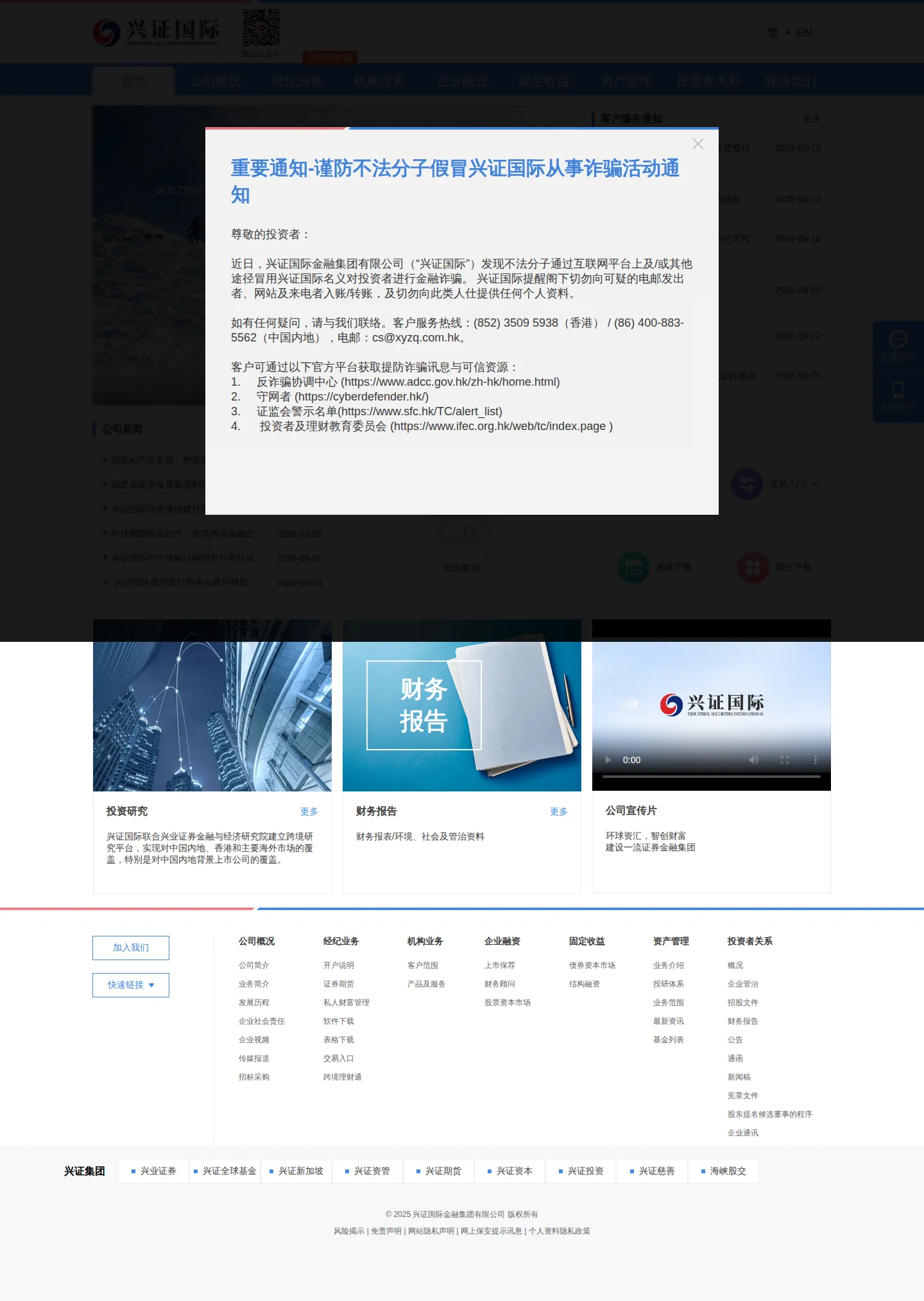
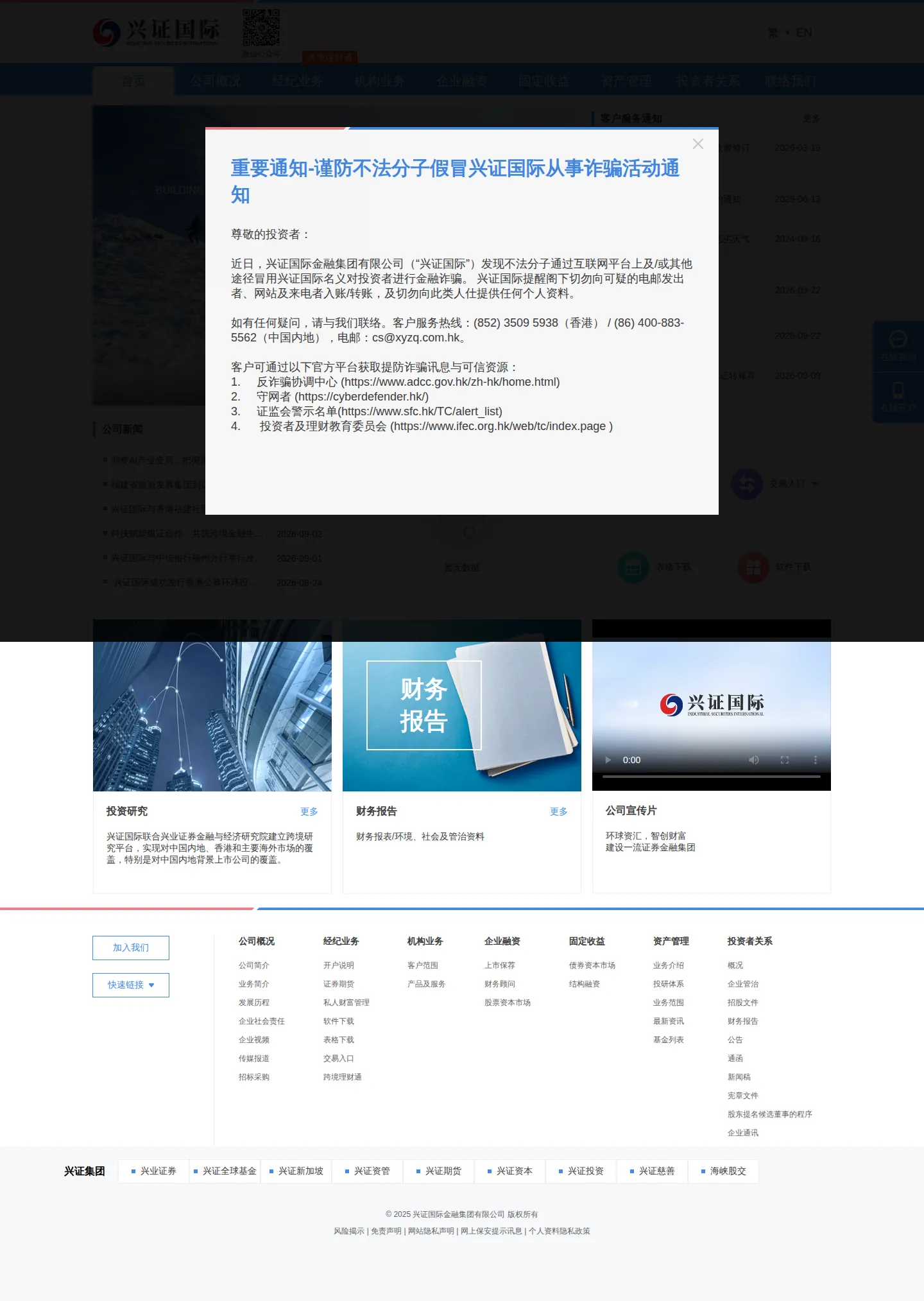
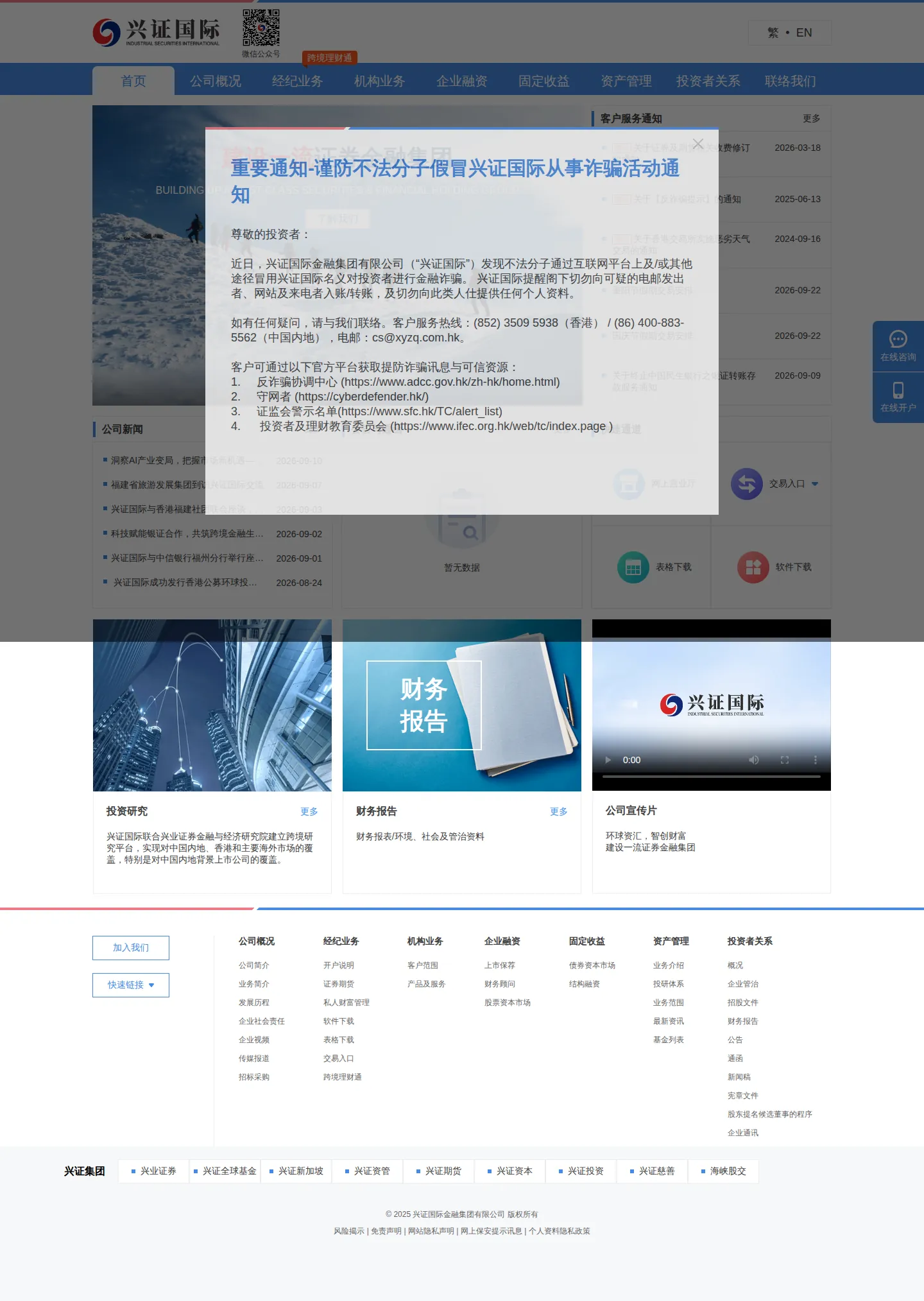
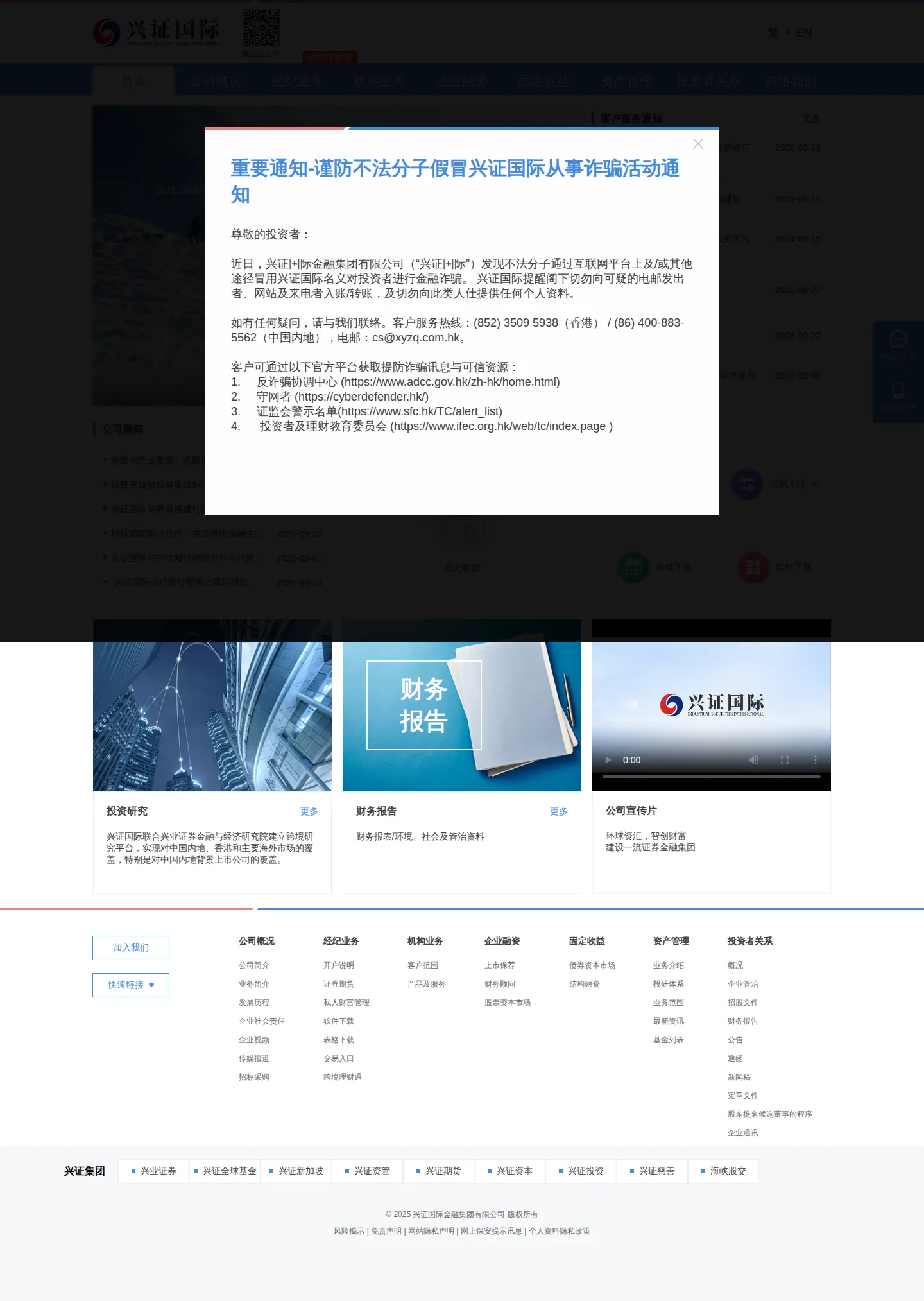
Pages captured from CISI’s own site when this review was written. Brokers change their terms; these are what we read.
Score history
Recomputed daily; every move is on the record. The current score is always the latest row.
| Date | Score | Move |
|---|---|---|
| 2026-10-13 | 5.7 | ▲ |
| 2026-07-25 | 4.1 | ▼ |
| 2026-07-18 | 4.2 | ▲ |
| 2026-07-11 | 4.1 | · |
FAQ
Is CISI regulated?
Yes. Three group subsidiaries hold active Hong Kong SFC licences (Type 2, Types 4, 5 and 9, and Type 6), each confirmed on the register under its full company name.
What does CISI charge?
Some fees are published, but no EURUSD spread is listed for any account a retail client can open, so a full cost comparison isn’t possible.
What trading platforms does CISI offer?
CISI offers its own mobile app, a Windows client called SP Trader, and the Esunny platform for futures, options and algorithmic trading.
How can I contact CISI support?
Support is reachable by email, live chat and a published phone number, staffed in the client’s own language during published hours.
Is my money protected if CISI fails?
As an SFC-regulated firm, compensation is available up to 500,000 HKD, but there’s no negative balance protection requirement and the dispute adjudicator charges the claimant to file.
How this review works
Track CISI live: score moves and red notices, in your pocket.